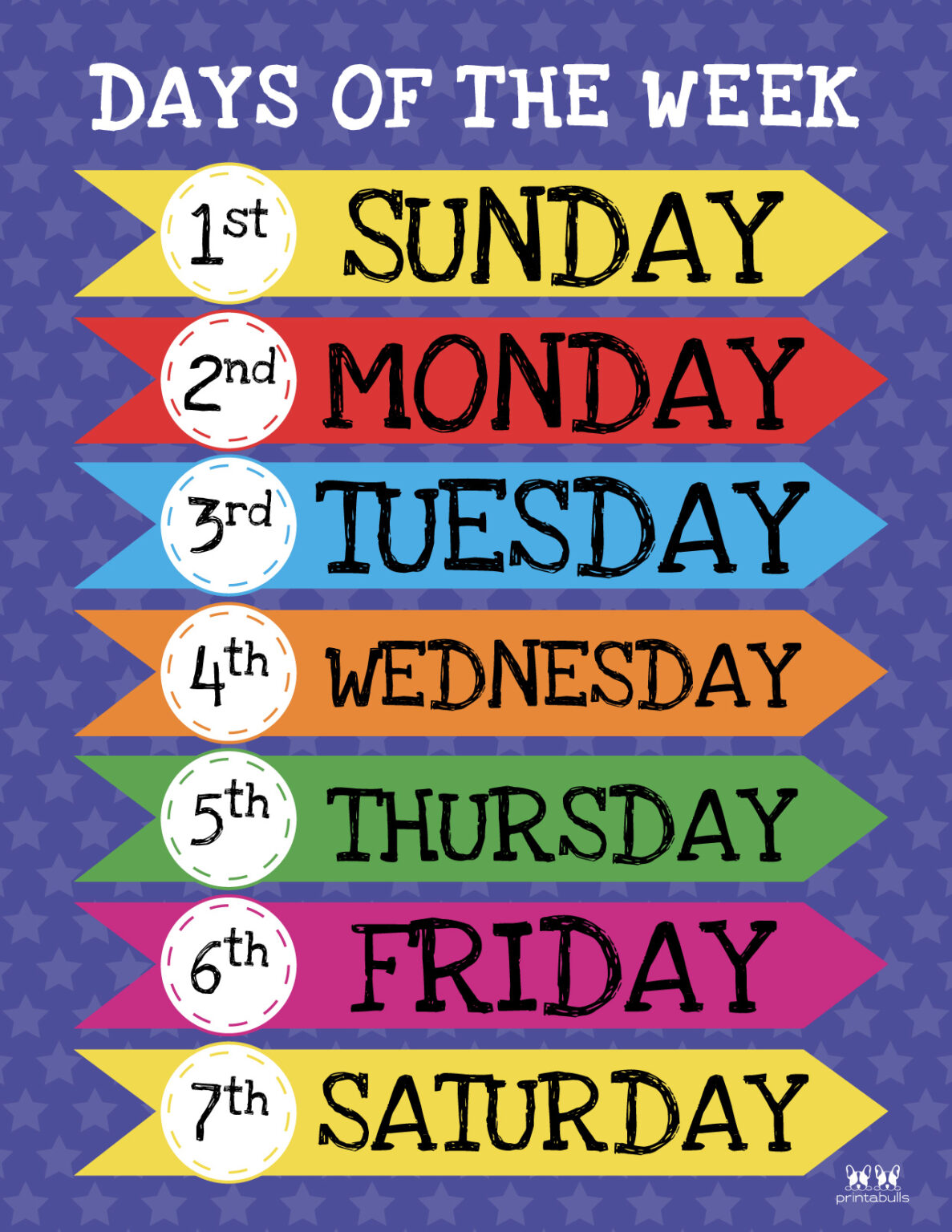
Tracking the days of the week can be a fundamental aspect of classroom management and learning. A Days Of The Week Print is a versatile resource that can be used in various educational settings. This printable can help children learn about the days of the week, enhance their organizational skills, and provide a visual reference that makes time management easier. In this guide, we’ll explore effective ways to use this printable resource, the best formats available, and tips for customization and printing.
Understanding the Importance of Days Of The Week Print
The concept of days of the week is one of the first organizational tools children encounter. It lays the foundation for understanding time, scheduling, and routine. By having a Days Of The Week Print in your classroom or home, you create a visual tool that reinforces these concepts daily.
For teachers, this resource can be pivotal in lesson planning. It helps establish a routine, allowing students to anticipate upcoming activities. Furthermore, visual aids are essential for various learning styles, particularly for younger children who may benefit from seeing the days of the week illustrated.
Choosing the Right Format for Your Needs
When looking for a Days Of The Week Print, you’ll find various formats available. Here are some common options:
- Wall Posters: Large prints that can be hung in the classroom or at home, providing a constant visual reminder of the week’s structure.
- Flashcards: These can be great for interactive learning, allowing students to engage with each day individually.
- Worksheets: Incorporate these into lesson plans where students can write activities or events scheduled for each day.
- Labels: For organizing classroom materials or student assignments, labels with the days can help students keep track of their tasks.
Deciding which format works best for you depends on your specific teaching style and the needs of your students. For example, younger children may benefit more from colorful wall posters, while older students might find flashcards or worksheets more engaging.
Printing Tips for Optimal Use
Once you’ve selected your preferred Days Of The Week Print format, it’s time to print it out. Here are some practical tips to ensure the best results:
- Paper Choice: Use cardstock for durability if you plan to laminate the print. It holds up better than regular paper, especially in a classroom setting where prints may be handled frequently.
- Printer Settings: Adjust your printer settings to ensure the best quality. If you’re using color prints, select a high-quality option to make the colors vibrant and engaging.
- Size Considerations: Make sure to check the dimensions of the print. Most resources are formatted for standard paper sizes (like A4 or letter size), but if you’re using larger formats, ensure your printer can handle that size.
- Laminating: If you want the prints to last longer, consider laminating them. This is particularly useful for wall posters or flashcards, as it protects them from wear and tear.
Ideas for Incorporating the Days Of The Week Print in Lessons
Using a Days Of The Week Print effectively in your classroom can enhance student engagement and comprehension. Here are some practical ways to incorporate it into your lessons:
- Daily Schedule: Use the print to outline the daily schedule. For example, you could write down what subjects will be taught each day, which helps students anticipate what’s coming up.
- Classroom Calendar: Integrate the Days Of The Week Print into a broader classroom calendar. You can have students mark special days, field trips, or events, creating ownership of their learning environment.
- Themed Activities: On each day of the week, assign a specific theme or activity. For instance, “Mindful Mondays” could involve reflective exercises, while “Fun Fridays” can include games or creative projects.
- Homework Reminders: Use the print to remind students of homework due dates. You can write down specific assignments for each day, helping students manage their time effectively.
- Interactive Games: Turn learning into a game by using flashcards. Students can work in pairs to match activities to the correct day, reinforcing their understanding of the week.
Customizing Your Days Of The Week Print
Customization can make your Days Of The Week Print even more effective. Here are some ideas to personalize your print:
- Color Schemes: Use colors that resonate with your students. Bright, engaging colors can capture attention, while softer tones may work better in calming environments.
- Images and Icons: Add relevant images or icons that correspond with each day. For example, you could include a sun for Monday (representing a fresh start) or a party hat for Friday.
- Writing Spaces: Leave blank spaces next to each day for students to write their assignments, activities, or reminders. This encourages them to engage with the material actively.
Engaging Students With the Days Of The Week Print
Finally, engaging students with the Days Of The Week Print is essential for retention and understanding. Here are a few strategies:
- Group Discussions: After introducing the print, have students discuss what they do on each day. This can help them connect the concept of days with real-life activities.
- Craft Activities: Incorporate arts and crafts by having students create their own versions of the Days Of The Week Print. This hands-on approach can enhance understanding and retention.
- Routine Reinforcement: Regularly refer to the print during your daily routines. For instance, ask students what day it is and what is scheduled for today, reinforcing their learning through repetition.
By integrating a Days Of The Week Print into your teaching strategies, you create a resource that not only aids in learning about time but also fosters a structured environment that encourages responsibility and organization among students.
Implementing these strategies will help you maximize the effectiveness of this resource, ensuring it serves your teaching needs while engaging your students.









