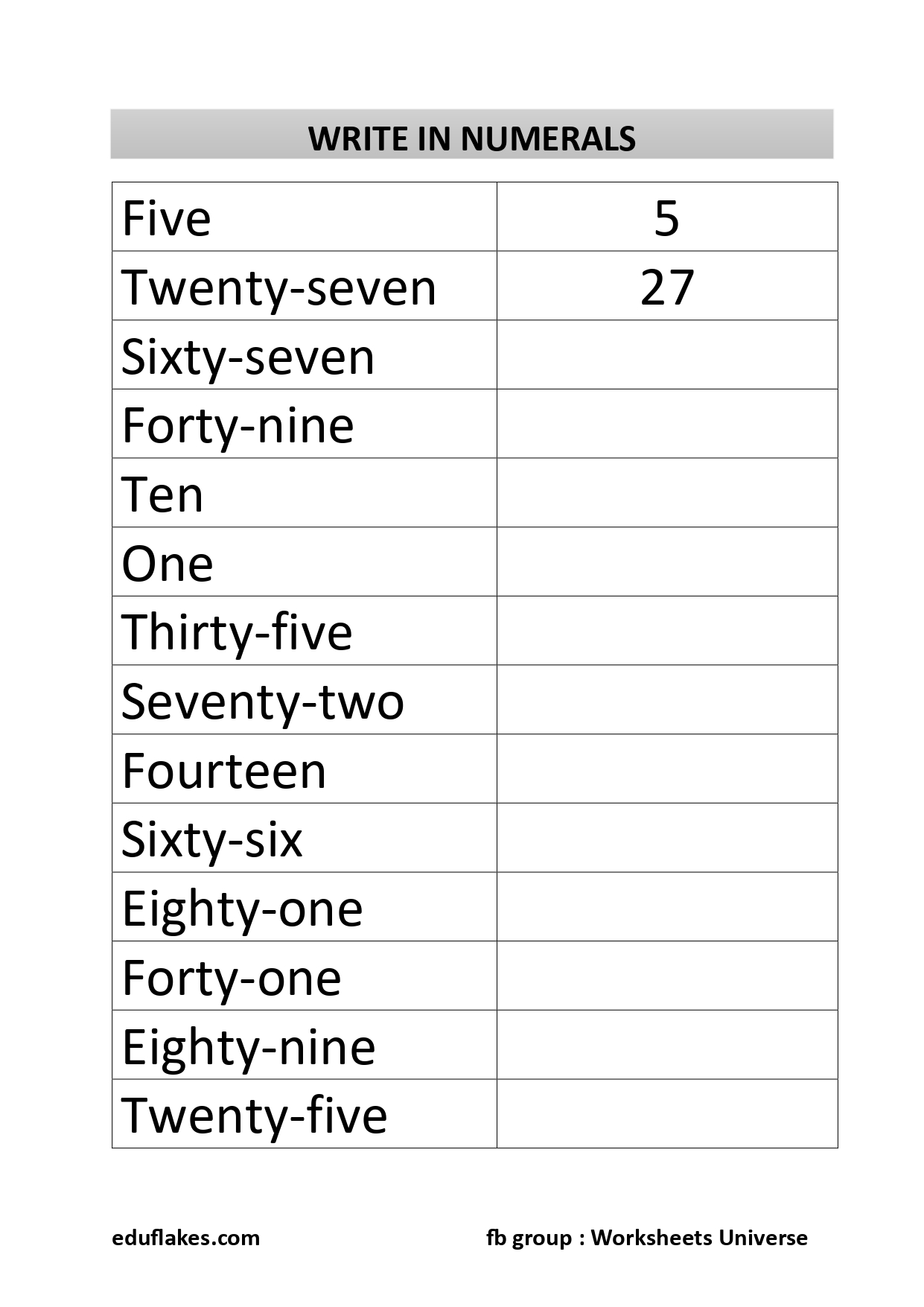
When teaching young learners to express numbers in words, using a Writing Figures In Words Worksheet can be incredibly effective. This resource helps students practice converting numeric values into written form, a crucial skill in developing their literacy and numeracy. In this article, I’ll guide you through how to effectively utilize this worksheet in your classroom or homeschool setting, providing practical tips along the way.
Understanding the Importance of Writing Numbers in Words
Learning to write figures in words is not just about spelling; it reinforces number sense and enhances reading skills. Students begin to see the connection between the written word and its numeric counterpart, which is vital for their overall mathematical literacy. This skill is particularly important for students in Grades 1 to 3, where foundational skills are established.
Using a Writing Figures In Words Worksheet helps students practice this skill repeatedly. Repetition is key; it solidifies their understanding and makes the transition from numbers to words more intuitive.
Preparing to Use the Worksheet
Before diving into the worksheet, ensure you have the right materials ready. Here’s a quick checklist:
- Printable Worksheet: Obtain a high-quality PDF version of the Writing Figures In Words Worksheet. This format is ideal as it avoids reformatting issues that can occur with image files.
- Writing Tools: Have plenty of pencils or markers available. Encourage students to use different colors for different number ranges to make the activity more engaging.
- Space for Practice: Set up a comfortable workspace where students can focus without distractions. Clear desks or tables work best.
Step-by-Step Guide to Using the Worksheet
Step 1: Introduce the Concept
Start by explaining the significance of writing numbers in words. Use everyday examples, such as prices in a store or ages in a family, to illustrate how this skill is used in real life. Engage students by asking them to think of situations where they might need to write numbers in words.
Step 2: Model the Process
Show students how to convert a few simple figures into words. For example, write the number 23 on the board and demonstrate how to spell it out: “twenty-three.” Make sure to pronounce each part clearly, emphasizing the connection between the digits and their written form.
Step 3: Guided Practice
Distribute the Writing Figures In Words Worksheet and work through the first few examples together as a class. This collaborative approach allows students to ask questions and clarifies any confusion before they begin working independently.
Step 4: Independent Practice
Allow students time to complete the worksheet on their own. Encourage them to take their time and sound out each number as they write it. If they seem hesitant, remind them that practice makes perfect, and that it’s okay to make mistakes as they learn.
Step 5: Review and Reinforce
After the students have completed the worksheet, review their answers together. This is a great opportunity to discuss common errors and clarify any misunderstandings. Consider using a projector or smart board to showcase a few examples and discuss the correct spellings as a class.
Spacing Practice Across the Week
To maximize learning, consider spacing the use of the Writing Figures In Words Worksheet over several days rather than cramming it into one sitting. Here’s how you might structure it:
- Day 1: Introduce the worksheet and complete the first section together.
- Day 2: Assign a few numbers for students to write in words as a morning warm-up activity.
- Day 3: Have students complete another section independently, then share their answers with a partner.
- Day 4: Review tricky numbers and practice spelling them again.
- Day 5: Conduct a fun quiz or game where students convert figures to words in a timed challenge.
This method not only reinforces their learning but also keeps the material fresh and engaging.
Additional Activities to Enhance Learning
To further solidify students’ understanding, consider incorporating these activities alongside the Writing Figures In Words Worksheet:
- Number Word Bingo: Create bingo cards with numbers written in words. Call out numbers, and have students cover the corresponding word on their cards.
- Story Problems: Encourage students to write simple story problems that incorporate numbers, then have their classmates write the numbers in words.
- Creative Writing: Have students write short paragraphs about their favorite numbers, using the Writing Figures In Words Worksheet to express any numeric values.
Assessing Understanding
It’s crucial to assess how well students have grasped the concept of writing figures in words. You can do this through:
- Observation: Watch students as they work through the worksheet. Are they confidently converting numbers to words?
- Quizzes: Give a short quiz at the end of the week to evaluate their understanding.
- Peer Review: Pair students up to review each other’s worksheets and provide feedback.
Tips for Success
- Use Clear Fonts: When printing the worksheet, select a font that is easy to read. This helps students clearly see the numbers they need to write.
- Encourage Neatness: Remind students that neat handwriting is important, especially when spelling out numbers.
- Provide Examples: Offer a reference sheet with common numbers and their written forms for students to consult as they work.
By following these steps, you can effectively integrate the Writing Figures In Words Worksheet into your teaching routine, enhancing your students’ understanding of numbers and words alike.
One useful detail to keep in mind is that using a variety of worksheets with increasing complexity can help maintain student interest and cater to different learning paces.

![Do A Dot Printables Free - Do A Dot Coloring Pages Free Printable [2025]](https://printablenew.org/wp-content/uploads/2026/10/do-a-dot-printables-free-150x150.png)