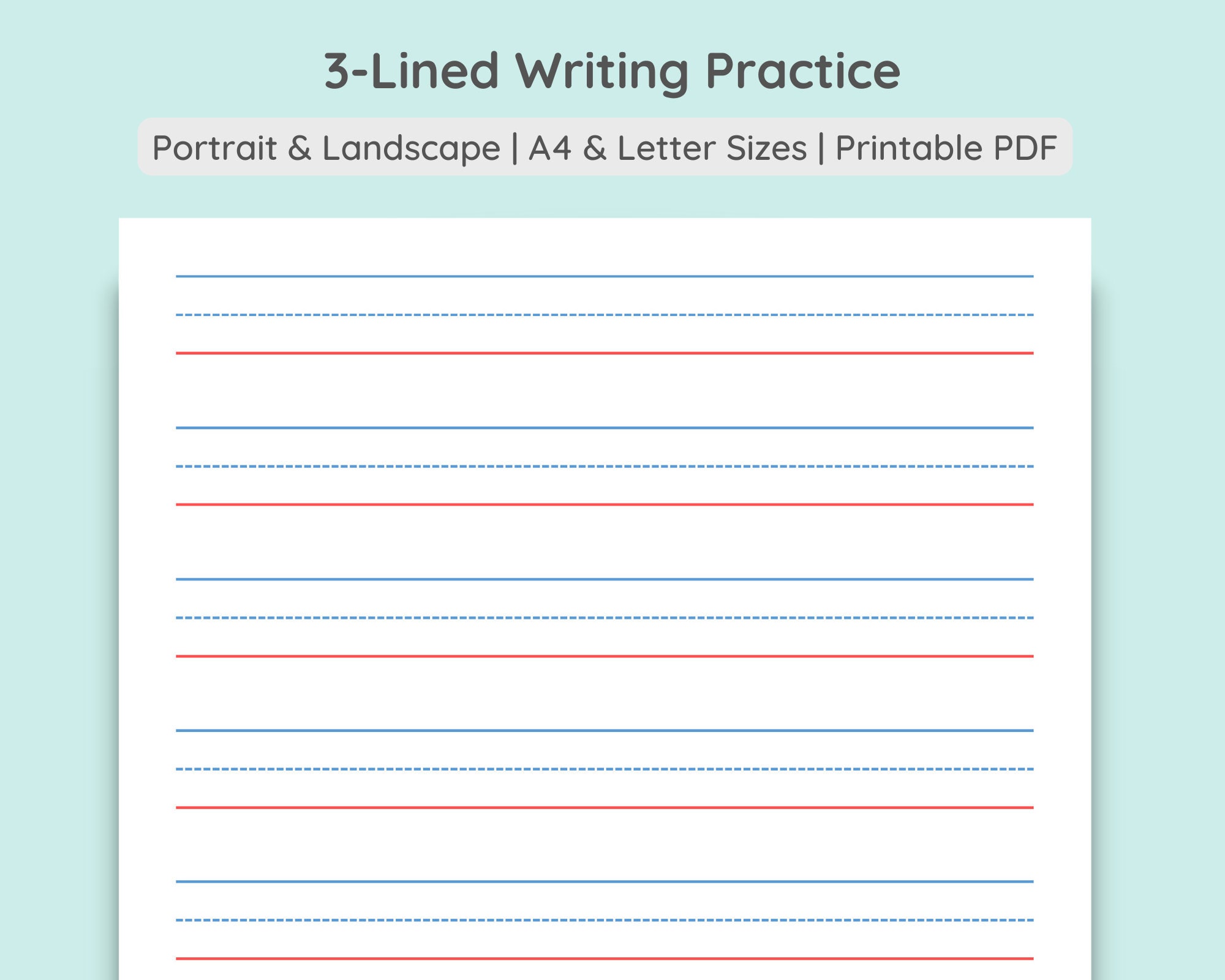
Three Lined Paper For Writing is an essential tool for teachers and parents looking to support children’s writing skills. This resource stands out by providing a structured format that encourages neat handwriting and organized thoughts. Unlike standard blank paper, three lined paper offers clear guidance on where to place letters, making it especially beneficial for early writers.
Understanding the Layout of Three Lined Paper
The primary feature of Three Lined Paper For Writing is its distinct layout. Typically, it consists of three horizontal lines on each page, designed to accommodate various letter sizes and styles. The middle line is often slightly thicker or darker, serving as a baseline for lowercase letters. This layout helps students learn proper letter formation and spacing.
Different Sizes and Formats
You can find three lined paper in various sizes, including standard letter size (8.5 x 11 inches) and A4 size. The choice of size may depend on your printer capabilities, classroom needs, or personal preference. It’s also available in different styles, like primary lined paper with wider spacing for younger students or narrower lines for more advanced writers. Each format serves a specific purpose and age group.
How to Use Three Lined Paper in the Classroom
Integrating Three Lined Paper For Writing into classroom activities can enhance student engagement and improve writing skills. Here are some practical ways to use this resource effectively:
Writing Prompts and Exercises
Consider using three lined paper for writing prompts. Provide students with a creative topic, and have them write a short story or description. The lined structure helps them focus on their handwriting and spelling without worrying about formatting. This exercise can be easily adapted for different grade levels by adjusting the complexity of the prompts.
Handwriting Practice
For younger students, three lined paper serves as an excellent tool for handwriting practice. You can create worksheets where they trace letters or copy sentences. The lined format guides them in maintaining consistent letter size and spacing, which is crucial for developing legible handwriting.
Benefits of Using Three Lined Paper
Using Three Lined Paper For Writing offers multiple benefits for both teachers and students. It provides a structured approach that can help in various educational contexts.
Encouraging Neatness and Organization
One of the primary advantages of using lined paper is that it promotes neatness. Students can visualize how their handwriting should look and work towards achieving that standard. This organization can lead to improved presentation of their work, which is often crucial in assessments or displays.
Supporting Writing Development
The structured lines encourage students to develop their writing skills. As they become more comfortable with letter formation, they can transition to using standard blank paper with greater ease. This progression is essential for building confidence in their writing abilities.
Customizing Your Three Lined Paper
While standard three lined paper is effective, customizing it can enhance its usefulness in your classroom. Here are some ideas for customization:
Adding Margins or Spaces
Consider adding a margin or space for students to include illustrations or notes alongside their writing. This addition can make the paper more engaging and allow for creative expression. For instance, younger students might enjoy drawing a picture related to their writing prompt.
Themed Designs
You can create themed versions of three lined paper to coincide with lessons or seasons. For example, using a holiday theme can make writing assignments more enjoyable. Themed designs can motivate students to engage with their writing, making it feel less like a chore and more like a creative activity.
Downloading and Printing Three Lined Paper
Finding and downloading Three Lined Paper For Writing is straightforward. Many educational websites offer free printable templates. When printing, consider the following tips for the best results:
Printer Settings
Ensure your printer settings are adjusted for quality printing. Selecting a higher DPI (dots per inch) setting can yield clearer, more defined lines, which is especially important for younger students learning to write. Portrait orientation is typically the best choice for lined paper.
Paper Type
Using a heavier paper, such as cardstock, can enhance durability, especially if students will be using markers or colored pencils. If you plan to laminate the sheets for reuse, cardstock is the best option as it holds up better over time.









