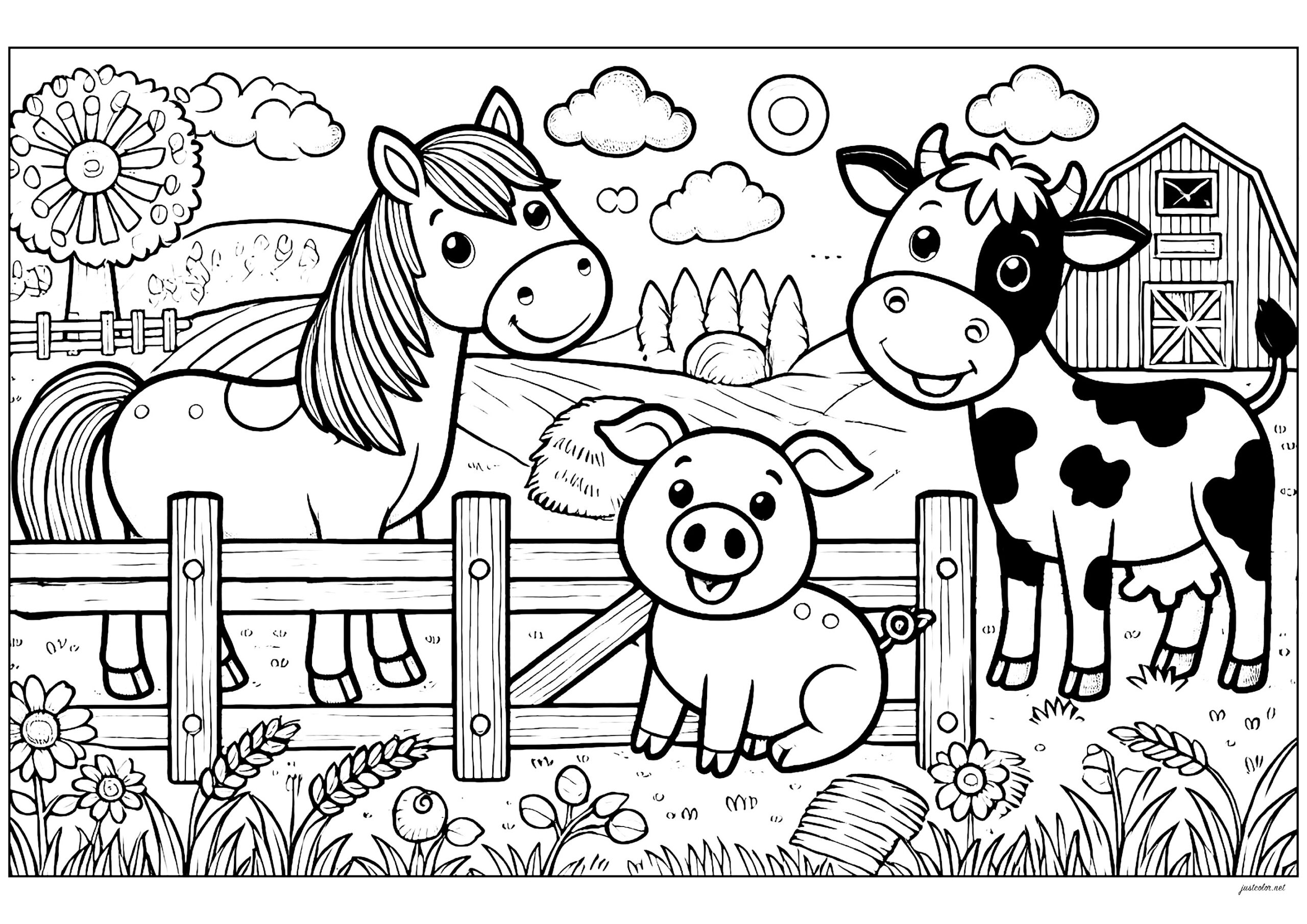
Coloring is a fantastic way to engage children, especially when it involves themes they love. If you’re on the lookout for fun and educational resources, Printable Farm Pictures To Color can be a delightful addition to your collection. These coloring pages not only foster creativity but also provide a calming activity for children, making them perfect for both classroom and home settings.
Why Choose Farm-Themed Coloring Pages?
Farm-themed coloring pages are not just entertaining; they also offer a variety of learning opportunities. Children can learn about different farm animals, crops, and the environment while they express their creativity. Plus, these pages are suitable for a wide range of ages, from preschoolers to early elementary students.
Using Printable Farm Pictures To Color can spark conversations about where food comes from, the role of farmers, and the importance of agriculture in our lives. These discussions can enhance children’s understanding of their world while they enjoy the simple pleasure of coloring.
Best Materials for Coloring
When it comes to coloring, the right materials can make a big difference. Here’s a breakdown of some options:
- Crayons: Great for younger children, crayons are easy to hold and come in a variety of colors. They’re less likely to create messes compared to markers.
- Colored Pencils: These are perfect for older kids who may want finer details. They allow for shading and blending, which can enhance the coloring experience.
- Markers: While they provide vibrant colors, markers can bleed through thinner paper. If you’re using them, consider heavier paper or cardstock.
Paper Considerations
The choice of paper is crucial. Standard printer paper works, but it can be thin and may result in bleed-through if using markers. Here are some recommendations:
- Standard Printer Paper (20 lb): Suitable for crayons and colored pencils. If you’re using markers, be cautious of bleed-through.
- Cardstock (65 lb or higher): This thicker paper holds up better against markers and is also great for lamination if you want to preserve the artwork.
Creative Uses for Printable Farm Pictures
There are countless ways to use Printable Farm Pictures To Color in both educational and fun scenarios. Here are some ideas:
- Classroom Activities: Incorporate these coloring pages into your lesson plans. After discussing farms and agriculture, let students color pictures that represent what they’ve learned.
- Home Projects: Use them for home schooling or as a fun activity during family time. You can set up a mini art gallery at home to display the finished products.
- Seasonal Themes: Tie the coloring pages to seasonal themes, such as planting in spring or harvest in autumn. This can help children connect their coloring activities with real-life events.
Group Activities
Consider organizing group coloring sessions where children can work together. This can foster teamwork and social skills. You might even turn it into a competition, with prizes for the most creative or colorful pictures.
Tips for Printing
To ensure the best results when printing your Printable Farm Pictures To Color, keep these tips in mind:
- Use Portrait Layout: Most coloring pages are designed for portrait layout, which fits standard paper sizes well.
- Check Printer Settings: Adjust your printer settings to ensure the best quality. Use the “best” quality print option for clearer images.
- Test Print: If you’re unsure about how a particular design will print, do a test print on regular paper before using your preferred cardstock.
Encouraging Creativity and Learning
Encourage children to add their own elements to the farm pictures. They can draw additional animals, crops, or even a farmer. This not only enhances their creativity but allows them to personalize their artwork, making it even more special.
Consider discussing different color choices and what they represent. For example, why is the barn red? What colors do they think are typical for certain animals? This can lead to a fun and educational discussion while they color.









