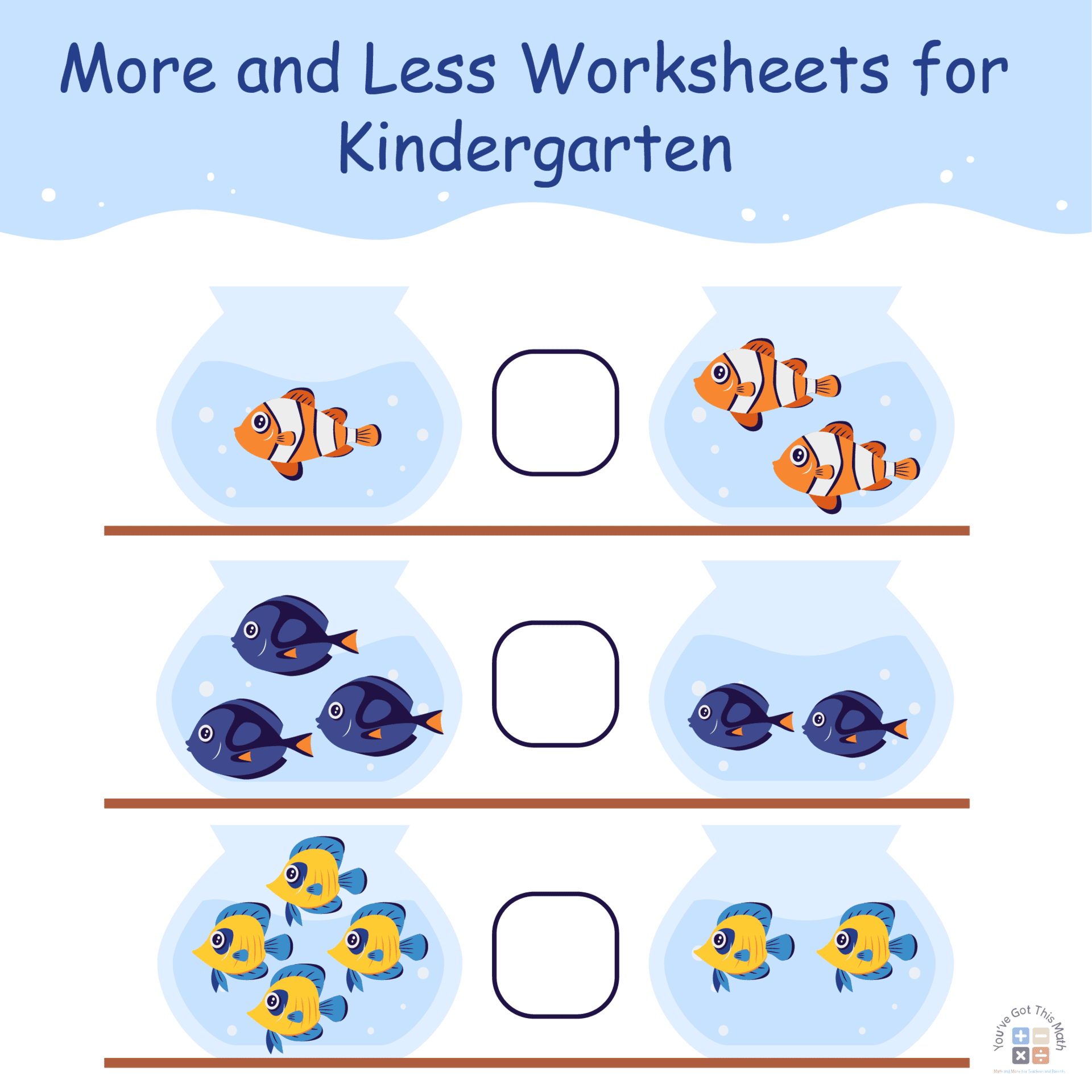
Understanding the concepts of “more” and “less” is essential for young learners, especially in kindergarten. More Less Worksheets For Kindergarten provide a fun and engaging way for children to grasp these foundational math skills. These worksheets not only help in reinforcing the concept but also encourage critical thinking and problem-solving. In this article, we’ll explore how to effectively use these worksheets, the best formats for printing, and tips for preparation and classroom integration.
Why Use More Less Worksheets?
More Less Worksheets are designed to help kindergarteners differentiate between quantities. This is crucial for their early math development. By engaging with these worksheets, children learn to compare numbers and understand basic principles of addition and subtraction. They’ll also develop essential skills like counting, recognizing numbers, and engaging in simple mathematical reasoning.
These worksheets typically include a variety of activities such as:
- Comparing two groups of objects
- Identifying which group has more or less
- Coloring or circling the correct answers
- Simple word problems
Incorporating these activities into your lesson plans can make learning enjoyable and interactive for your students.
Download Formats and Printing Tips
When it comes to More Less Worksheets For Kindergarten, you’ll find them available in various formats, primarily PDF and image files. PDF files are generally the best option for printing because they maintain their formatting across different devices. This means that you won’t have to worry about any reformatting issues that can occur with image files.
Here are some practical tips for printing:
- Paper Size: Standard letter size (8.5 x 11 inches) works well for worksheets. If you’re using a larger classroom printer, consider using A4 size as appropriate.
- Printer Settings: Set your printer to ‘Best Quality’ to ensure that colors are vibrant and lines are clear. This is especially important if the worksheets include illustrations or color-coding.
- Paper Type: For durability, consider using cardstock if you plan to laminate the worksheets for repeated use. For regular printing, standard printer paper is sufficient.
Preparing Your Worksheets for the Classroom
Once you’ve downloaded your More Less Worksheets, you’ll want to prepare them for use in your classroom. Here are some steps to make this process efficient:
- Review the Content: Before distributing the worksheets, take a moment to review the content. Make sure it aligns with your current teaching objectives and is suitable for your students’ skill levels.
- Organize Your Resources: It’s helpful to organize worksheets by theme or skill level. This way, you can easily access them during lessons. Consider using folders or binders for easy storage.
- Make Copies: Depending on your class size, you may need to make multiple copies. Keep in mind that printing double-sided can save paper and make the worksheets easier to handle for students.
- Lamination: If you choose to laminate your worksheets, they can be used multiple times. This is particularly useful for activities where students can write answers with dry-erase markers.
Engaging Activities With More Less Worksheets
To maximize the effectiveness of More Less Worksheets For Kindergarten, consider incorporating various engaging activities that complement the worksheets. Here are some ideas:
Group Activities
Organize group activities where students can compare quantities using physical objects like blocks or counters. This hands-on experience reinforces the concepts learned in the worksheets. For example, you might have two groups of students compare the number of blocks they have and determine which group has more or less.
Interactive Games
Turn learning into a game by using the worksheets as part of a classroom competition. Divide the class into teams and have them race to complete the worksheets correctly. This not only fosters a spirit of teamwork but also makes learning fun.
Real-Life Applications
Incorporate real-life scenarios to help students understand the concepts of more and less. For instance, during snack time, ask students to compare the number of apple slices they have versus their classmates. This practical application reinforces learning in a relatable way.
Adapting Worksheets for Diverse Learners
Every classroom is composed of diverse learners, so it’s important to adapt More Less Worksheets for different learning styles and abilities. Here are some strategies to consider:
- Simplify Language: For students who struggle with reading, simplify the instructions on the worksheets. Use clear, concise language and consider adding visuals to support understanding.
- Use Visual Aids: Incorporate visual aids such as charts or number lines alongside the worksheets. These tools can help students visualize the concepts of more and less effectively.
- Provide Varied Levels: Create or download worksheets that cater to different levels of difficulty. Some students may need more basic worksheets while others can handle more complex problems.
Where to Find More Less Worksheets
Finding quality More Less Worksheets For Kindergarten can be straightforward with the right resources. Here are some suggestions:
- Printable Resource Websites: Many websites offer free or paid resources that cater specifically to kindergarten math skills. Look for those that allow you to filter by grade level and subject.
- Educational Blogs: Many educators share their own worksheets on personal blogs. These can often be downloaded for free and may include unique designs and activities.
- Online Marketplaces: Websites like Teachers Pay Teachers offer a wide range of worksheets created by teachers for teachers. You can find high-quality resources tailored to specific learning objectives.









