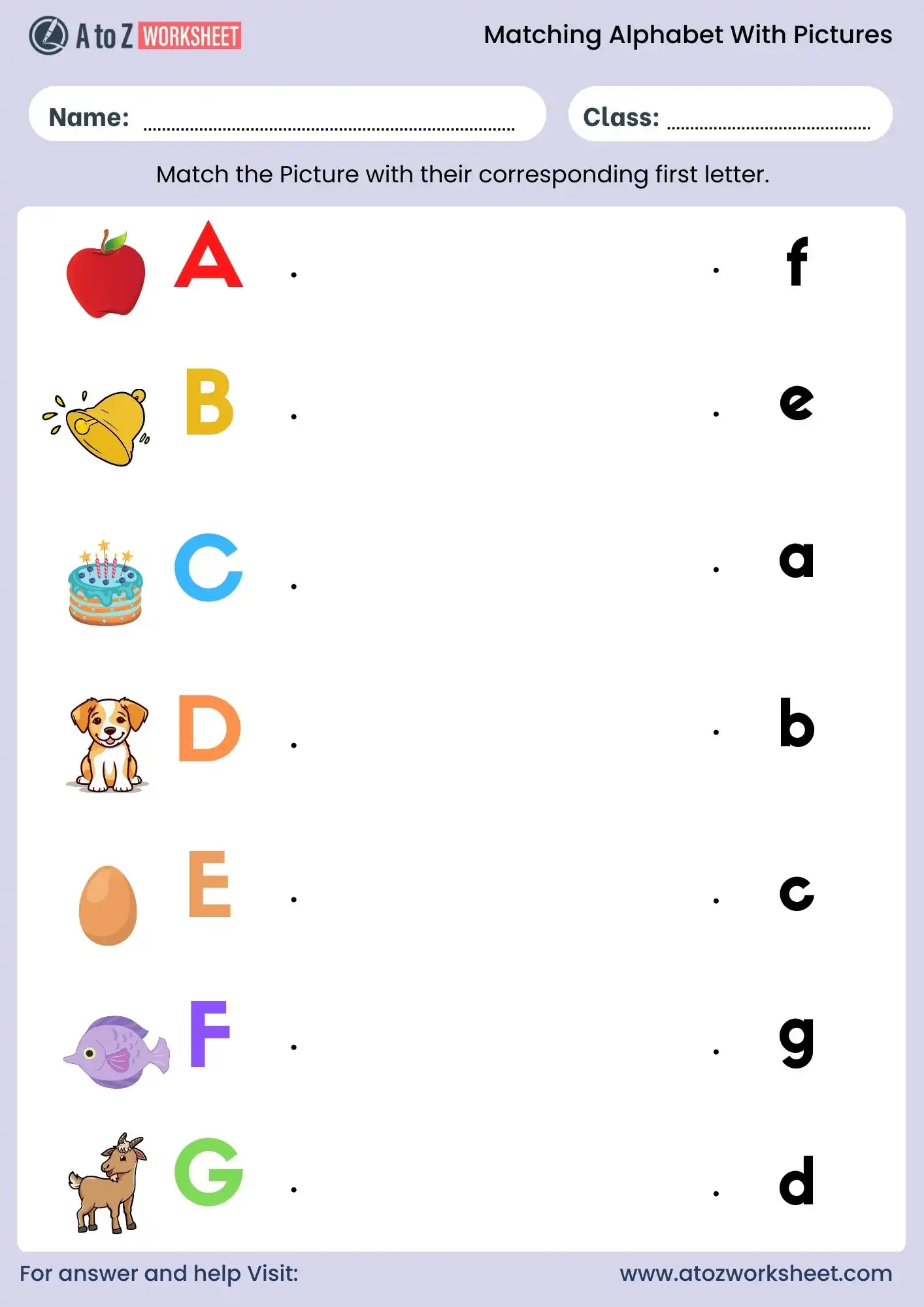
Matching Alphabet Letters With Pictures is a fantastic way to help children learn and reinforce their understanding of letters while associating them with corresponding images. This activity is particularly effective for preschool and early elementary students, typically aged 3 to 6 years. It encourages independent practice, making it ideal for both classroom settings and homeschooling environments.
Understanding the Importance of Letter Recognition
Letter recognition is a critical foundational skill for young learners. It sets the stage for reading and writing, helping children understand that letters represent sounds. When you pair letters with pictures, it enhances their learning experience by providing visual context. For instance, recognizing the letter “A” alongside an image of an apple makes the learning process more relatable and enjoyable.
Using worksheets that focus on Matching Alphabet Letters With Pictures can help solidify this skill. They encourage children to think critically about the connection between letters and words. As they work through these activities, they build confidence in their ability to identify and use letters correctly.
Creating Effective Worksheets
When designing worksheets for matching letters with pictures, consider the following elements to make them engaging and educational:
- Clear Layout: Keep the design simple and uncluttered. Use large images and letters to ensure children can easily identify them. A portrait layout often works better for printing as it fits standard paper sizes.
- Variety of Images: Include diverse images that correspond to different letters. For example, use an apple for “A,” a ball for “B,” and a cat for “C.” This not only aids in letter recognition but also introduces vocabulary.
- Instructions: Provide clear, concise instructions at the top of the worksheet. You might say something like, “Draw a line from each letter to the picture that starts with that letter.” This helps children understand what is expected without needing constant supervision.
- Age Appropriateness: Tailor the complexity of the images and letters to the appropriate age group. Younger children may benefit from familiar objects, while slightly older kids might enjoy more abstract representations.
- Printable Formats: Offer the worksheets in PDF format for easy downloading and printing. This ensures that the layout remains consistent across different devices and printers, avoiding any reformatting issues that could arise with image files.
Using the Worksheets in Different Settings
Classroom Use
In a classroom setting, these worksheets can be utilized as part of a structured lesson plan. Teachers can introduce a letter of the week and then provide matching worksheets as guided practice. Afterward, students can work on them independently or in pairs, promoting collaboration.
Homeschooling
For homeschooling parents, these worksheets can be a valuable resource for daily lessons. You can integrate them into a larger curriculum that includes phonics and vocabulary development. Consider setting aside a specific time each day for letter recognition activities, making it a fun and consistent part of your routine.
At Home
For parents looking to supplement their children’s learning, these worksheets can also be used during quiet time or as a fun activity on weekends. You could print several sheets and allow your child to choose which letters they want to work on. This choice can make the activity feel less like a chore and more like play.
Tips for Enhancing Engagement
To keep children engaged while matching alphabet letters with pictures, consider these additional strategies:
- Incorporate Games: Turn the activity into a game. For example, you can time how fast they can match letters to pictures or create a friendly competition among siblings or classmates.
- Use Stickers or Stamps: Allow children to use stickers or stamps to mark their answers. This adds a tactile element to the activity, making it more enjoyable.
- Provide Feedback: After they complete the worksheets, go over the answers together. This not only gives them immediate feedback but also reinforces their learning.
- Connect to Real Life: Encourage children to look for items around the house or classroom that start with the letters they’ve learned. This real-world connection can deepen their understanding and retention.
Adapting Worksheets for Diverse Learners
Every child learns differently, and it’s essential to adapt your worksheets to meet various learning needs. Here are some suggestions:
- Visual Learners: Use bright colors and bold images to capture their attention. Incorporate more visuals than text for these learners.
- Kinesthetic Learners: Pair the worksheets with physical activities. For instance, after matching letters, have them find objects around the room that start with those letters.
- Auditory Learners: Incorporate songs or rhymes that emphasize the sounds of the letters. This can enhance their learning experience and make it more memorable.
Where to Find Printable Resources
There are numerous websites where you can find printable worksheets for Matching Alphabet Letters With Pictures. Many educational resource sites offer free downloads, making it easy to access and print high-quality materials. Some popular options include:
- Teachers Pay Teachers: This platform has a wide variety of resources created by educators for educators. You can find unique worksheets tailored to different learning styles.
- Education.com: Offers a plethora of worksheets for various grades and subjects, including letter matching activities.
- Twinkl: Provides a subscription-based service with a vast range of educational materials, including printable alphabet resources.









