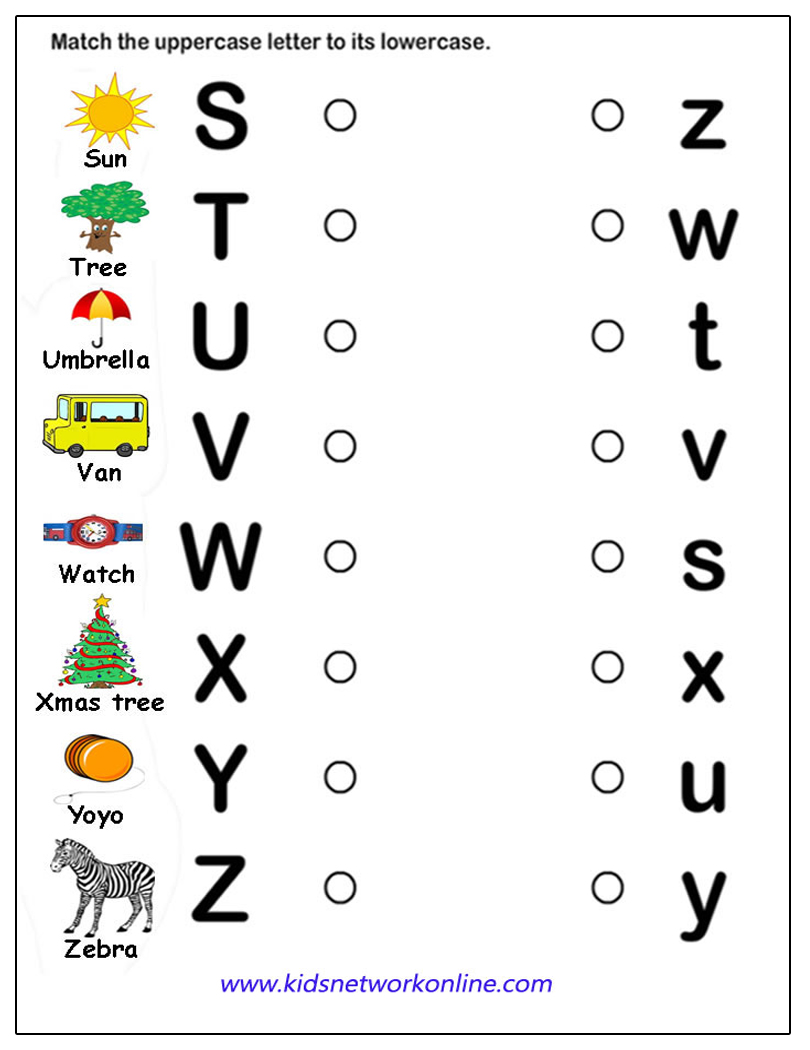
Teaching children the difference between uppercase and lowercase letters is fundamental to their literacy development. The resource on Upper And Lowercase Letter Matching is designed to help educators and parents engage young learners in a fun and interactive way. This printable resource provides a structured approach to letter recognition and matching, making it an essential tool for any early childhood education setting.
The Importance of Upper And Lowercase Letter Matching
Understanding the distinction between uppercase and lowercase letters is crucial for children as they begin to read and write. Recognizing these differences lays the groundwork for proper grammar, sentence structure, and overall literacy skills. By using a resource focused on Upper And Lowercase Letter Matching, you can facilitate this learning in a way that is enjoyable and effective.
When teaching this skill, it’s important to incorporate various methods to cater to different learning styles. For instance, some children may benefit from visual aids, while others might find kinesthetic activities more engaging. This resource allows you to blend these approaches seamlessly.
Resource Overview: What’s Included?
This printable resource offers a variety of pages designed specifically for Upper And Lowercase Letter Matching. Each page typically includes:
- Letter Matching Grids: Children can draw lines connecting uppercase letters to their lowercase counterparts.
- Coloring Activities: Engaging illustrations that encourage children to color in letters, reinforcing their recognition.
- Flashcards: Printable flashcards that can be used for memory games or one-on-one matching activities.
- Worksheets: Interactive worksheets that challenge children to complete letter matching tasks.
These elements are designed to foster engagement and reinforce learning through repetition and practice.
Layout and Design Choices
The layout of the Upper And Lowercase Letter Matching resource is intentionally crafted for young learners. Here are some key design elements you’ll notice:
- Clear Fonts: The letters are printed in a clear, bold font that is easy for children to recognize. This choice helps reduce confusion, particularly for those just starting to learn their letters.
- Large Spaces: Each letter pair is given ample space, allowing children to focus on individual letters without feeling overwhelmed. This is especially beneficial for younger children who may still be developing fine motor skills.
- Colorful Illustrations: Many pages include colorful images that are thematically linked to the letters, such as “A” for apple or “B” for balloon. This visual connection aids memory retention and makes learning more enjoyable.
By using a well-thought-out layout, the resource helps maintain children’s attention and encourages them to engage actively with the material.
Integrating the Resource Into Daily Learning
To make the most of the Upper And Lowercase Letter Matching resource, consider integrating it into your daily lesson plans. Here are some practical ways to do so:
- Morning Letter Review: Start each day by reviewing a few uppercase and lowercase letters. Use flashcards or matching grids to engage students as they arrive.
- Centers Activity: Set up a learning center where children can work independently or in pairs to complete matching worksheets. This encourages collaboration and peer learning.
- Interactive Games: Turn the matching activity into a game. For instance, use a timer and see how quickly students can match letters correctly, fostering a sense of competition and excitement.
- Home Connection: Send copies of the worksheets home with students so parents can reinforce learning. This not only helps with letter recognition but also encourages parent involvement in their child’s education.
By weaving this resource into your daily routine, you’ll create a consistent learning environment that promotes letter recognition and matching skills.
Adapting for Different Age Groups
While the Upper And Lowercase Letter Matching resource is primarily designed for early learners, it can also be adapted for slightly older students who may need reinforcement. Consider these adaptations:
- Increased Complexity: For older children, you can introduce additional letters or create more complex matching exercises that involve words rather than single letters.
- Incorporating Phonics: Combine letter matching with phonics lessons. For example, you might have children match letters while also practicing the sounds they make.
- Group Activities: Encourage older students to lead matching games with younger peers. This not only reinforces their own learning but also fosters leadership skills.
By adjusting the resource to suit different age groups, you ensure that it remains relevant and beneficial to a wider range of learners.
Print and Usage Tips
When printing the Upper And Lowercase Letter Matching resource, consider the following tips to ensure the best results:
- Paper Selection: Use cardstock for durability, especially if the resource will be used frequently or laminated for repeated use. Standard printer paper is fine for occasional use.
- Print Settings: Set your printer to “best quality” for clearer text and images. This helps ensure that letters are easily recognizable, which is essential for young learners.
- Color vs. Black and White: If printing in color is not an option, consider using a color printer for the first few pages and black and white for subsequent copies. Children can still color in the black and white pages, making them interactive.
By following these tips, you’ll create a high-quality resource that enhances the learning experience.









