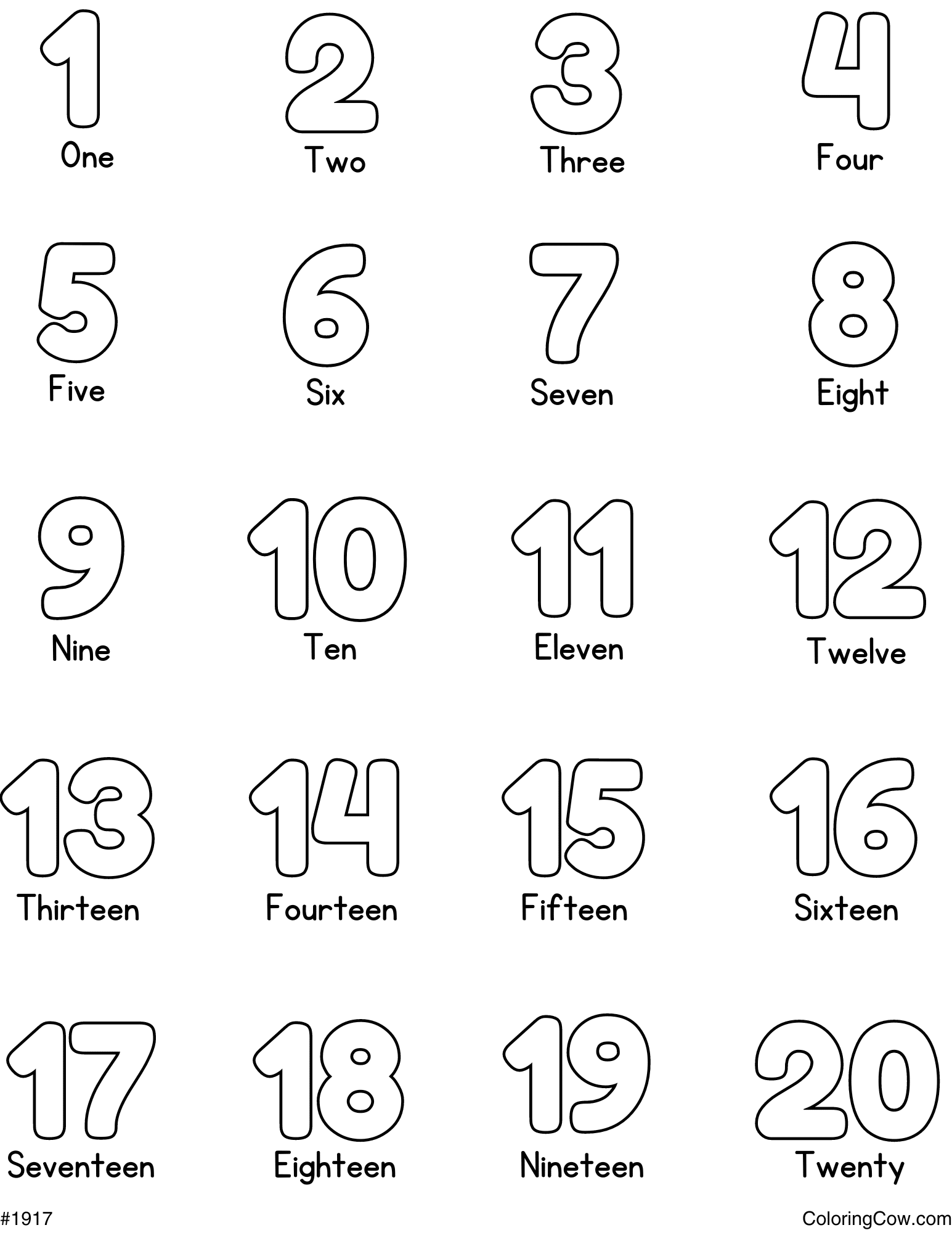
Coloring can be a fun and educational activity for young children, especially when it involves learning numbers. That’s why using Numbers 1 20 Coloring Pages is an excellent way to engage students or children at home while reinforcing their understanding of basic numerals. These coloring pages are not just about filling spaces with colors; they can be integrated into various teaching strategies to make learning enjoyable.
Understanding the Importance of Numbers 1 20 Coloring Pages
Coloring pages that focus on numbers 1 to 20 are ideal for preschool and kindergarten students, typically ranging from ages 3 to 6. At this age, children are developing their number recognition skills and beginning to understand the concept of quantity. By coloring these pages, they can visually connect the numeral to a corresponding quantity, which is a critical step in their early math education.
The designs of these coloring pages vary in complexity, catering to different skill levels. For younger children, pages with larger numbers and simpler shapes can facilitate easier coloring and understanding. For older preschoolers, you might find more intricate designs that incorporate the numbers into fun scenes, making the learning experience richer and more engaging.
Selecting the Right Coloring Pages
When choosing Numbers 1 20 Coloring Pages, consider the following aspects to ensure they are suitable for your classroom or home:
- Age Appropriateness: Look for designs that match the skill level of the children. Younger kids will benefit from straightforward numbers with large spaces, while older kids may enjoy pages with more detailed illustrations.
- Visual Appeal: Choose pages that are colorful and engaging. Illustrations that include animals, toys, or nature themes can make the activity more enjoyable.
- Educational Value: Opt for coloring pages that incorporate counting elements. For example, a page with the number “5” can include five apples or five stars, linking the numeral to its quantity.
- Print Quality: Ensure the pages are designed for easy printing. Low-resolution images can lead to pixelation, making them less enjoyable to color.
How to Use Numbers 1 20 Coloring Pages Effectively
Using these coloring pages can be straightforward, but there are creative ways to enhance their educational value:
1. One-on-One Learning Sessions
Spend time with a child while they color. As they work on their pages, engage them in conversation about the numbers they are coloring. Ask questions like, “Can you count how many stars are around the number 8?” This not only reinforces their counting skills but also builds their confidence in speaking about numbers.
2. Group Activities
In a classroom setting, consider creating a “numbers day” where each child colors a different page featuring a number. Once completed, have a showcase where children present their work to the class, explaining what number they colored and sharing interesting facts about it. This fosters a sense of community and encourages public speaking skills.
3. Incorporating Other Subjects
Use coloring pages as a springboard for lessons in art or storytelling. After coloring, children can create short stories about the numbers they colored. For instance, after coloring the number “3,” they could draw three related items and narrate a story about them.
4. Reinforcement Through Repetition
Children learn through repetition. Consider using the same coloring pages multiple times, perhaps with different coloring materials each time. For example, one day they can use crayons, and another day, markers or colored pencils. This not only reinforces their understanding of numbers but also allows them to explore different artistic techniques.
Tips for Printing and Materials
When preparing to print your Numbers 1 20 Coloring Pages, keep these practical tips in mind:
- Paper Type: Use standard printer paper for general coloring. If you plan to use markers, consider cardstock, as it holds up better against bleed-through.
- Print Settings: Set your printer to “portrait mode” for most coloring pages. This orientation tends to suit the designs best. Make sure to select the highest quality print setting to ensure clear lines and vibrant colors.
- Scale and Size: Most coloring pages are designed for standard letter-sized paper (8.5 x 11 inches). If you need smaller pages, adjust the print settings accordingly but be cautious of losing detail.
- Lamination for Longevity: If you want to keep the pages for repeated use, consider laminating them. This allows children to color with dry-erase markers, which can be wiped off for reuse.
Engaging Children With More Than Just Coloring
While coloring is a primary activity, consider these additional methods to engage children using the Numbers 1 20 Coloring Pages:
- Number Games: Create games where children match colored pages with corresponding physical items. For instance, after coloring the number “4,” they can find and group four small blocks or toys.
- Art Integration: After coloring, encourage children to add their drawings around the numbers. This can help them express their creativity while reinforcing their learning.
- Story Time: After completing their coloring, gather the children for a story that incorporates numbers. This can help them see numbers in different contexts, reinforcing their learning in a fun way.









