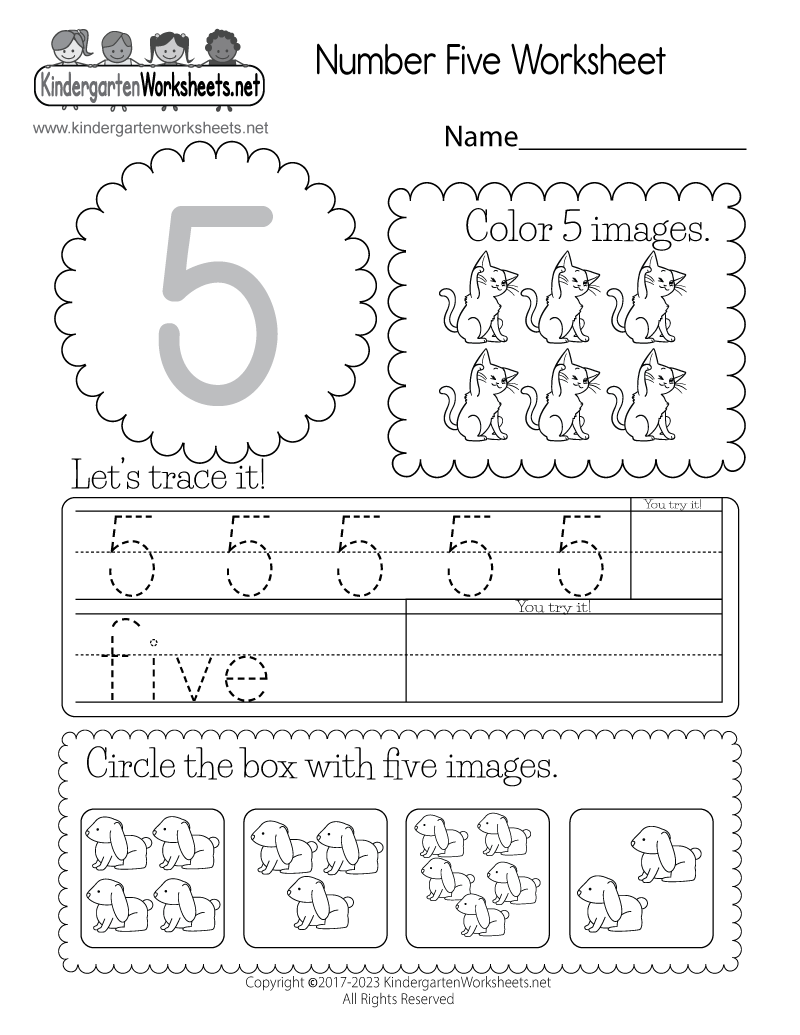
When teaching kindergarteners, finding ways to make learning engaging and effective is essential. One of the critical concepts in early mathematics is understanding numbers, particularly the number 5. Number 5 Worksheets for Kindergarten provide an excellent way to reinforce this foundational skill while keeping learning enjoyable. These resources can help children recognize the number, associate it with quantities, and practice writing it.
Choosing the Right Number 5 Worksheets
Selecting the appropriate worksheets is the first step. You’ll want to ensure that the worksheets are age-appropriate and align with your teaching objectives. Look for worksheets that include a variety of activities, such as:
- Number recognition: Activities that help children identify the number 5 among others.
- Counting exercises: Worksheets that encourage counting objects up to five.
- Writing practice: Pages designed for practicing writing the number 5 correctly.
- Coloring activities: Fun designs that incorporate the number 5, making learning visually appealing.
Consider downloading worksheets that are specifically designed for kindergarten. They should be colorful, engaging, and simple enough for young learners to understand.
Downloading and Printing Your Worksheets
Once you’ve chosen your worksheets, the next step is downloading and printing them. Most printable resources come in PDF format, which is convenient because it maintains the layout when printed.
- Download the worksheets: Click the download button and save the PDF file to your computer.
- Open the file: Use a PDF reader to view the document. This ensures that you see the worksheets as they will appear when printed.
- Print settings: Before printing, check the settings:
- Paper size: Use standard letter size (8.5 x 11 inches) for easy handling.
- Orientation: Portrait orientation usually works best for worksheets.
- Quality settings: Choose a higher quality for clearer images and text.
Using cardstock for printing can enhance durability, especially if the worksheets will be used multiple times or laminated for reuse.
Setting Up the Worksheets for Use
Now that you have your worksheets printed, it’s time to set them up for classroom use. Here are some practical tips to make the most of your Number 5 Worksheets for Kindergarten:
- Organize by type: Group similar worksheets together. For example, keep all counting exercises in one section and writing practice in another. This setup helps streamline lesson planning.
- Create a learning station: Designate a specific area in your classroom for math activities. Include your worksheets, counting manipulatives (like blocks or counters), and writing tools.
- Incorporate hands-on activities: Use the worksheets alongside physical objects. For instance, when counting, have children use five blocks to reinforce the concept of quantity.
Engaging Students With the Worksheets
To maximize engagement, consider integrating the worksheets into your broader lesson plans. Here are some strategies:
- Interactive sessions: Conduct group sessions where children can work on the worksheets together. This encourages collaboration and discussion about numbers.
- Incorporate games: Turn worksheet activities into games. For example, use a bingo format where children find the number 5 among other numbers on their worksheets.
- Use positive reinforcement: Celebrate achievements, whether it’s recognizing the number or writing it correctly. Stickers, stamps, or a simple praise can motivate students.
Tracking Progress With Number 5 Worksheets
Tracking student progress is vital in assessing their understanding of the number 5. Here’s how to effectively use the worksheets for this purpose:
- Create a progress chart: Keep a chart that tracks how many worksheets each child completes. This provides a visual representation of their progress over time.
- Review completed worksheets: Regularly review the completed worksheets. Look for patterns in mistakes or areas where a child excels. This can inform your future lesson plans.
- Communicate with parents: Share progress with parents. This can be done through parent-teacher meetings or sending home a progress report. Include notes on how they can reinforce learning at home.
Adapting Worksheets for Diverse Learners
Every child learns differently, and it’s important to adapt your worksheets to meet various needs. Here are some strategies to ensure inclusivity:
- Modify difficulty levels: Some children may find certain activities too easy or too challenging. Be prepared to adjust the number of items they count or provide additional guidance on writing.
- Provide additional resources: For children who may struggle, offer extra practice sheets or one-on-one support during class.
- Use visual aids: Incorporate visual aids like number cards or flashcards that can complement the worksheets. This can help visual learners grasp concepts more easily.









