Understanding the concepts of “more” and “less” is essential for kindergarten students as they build foundational math skills. More Or Less Worksheets Kindergarten are practical tools that can help educators and parents reinforce these concepts in a fun and engaging way. By using these worksheets, children can learn to compare quantities, which is a key skill in early mathematics.
Importance of More and Less in Early Education
Before diving into the specifics of worksheets, let’s explore why understanding “more” and “less” is crucial for young learners. These concepts form the basis for comparison, which is a fundamental aspect of math. Kids will encounter these terms not only in math but also in daily life. For instance, when comparing the number of apples to oranges, they need to grasp which quantity is greater or smaller.
Incorporating More Or Less Worksheets Kindergarten into your teaching strategy can help solidify these concepts. Worksheets provide structured practice, allowing children to visualize and apply what they’ve learned. They can also cater to various learning styles, whether your child is a visual learner, auditory learner, or kinesthetic learner.
Types of More Or Less Worksheets
When searching for More Or Less Worksheets Kindergarten, you’ll find various types designed to meet different learning needs. Here are some common formats you might encounter:
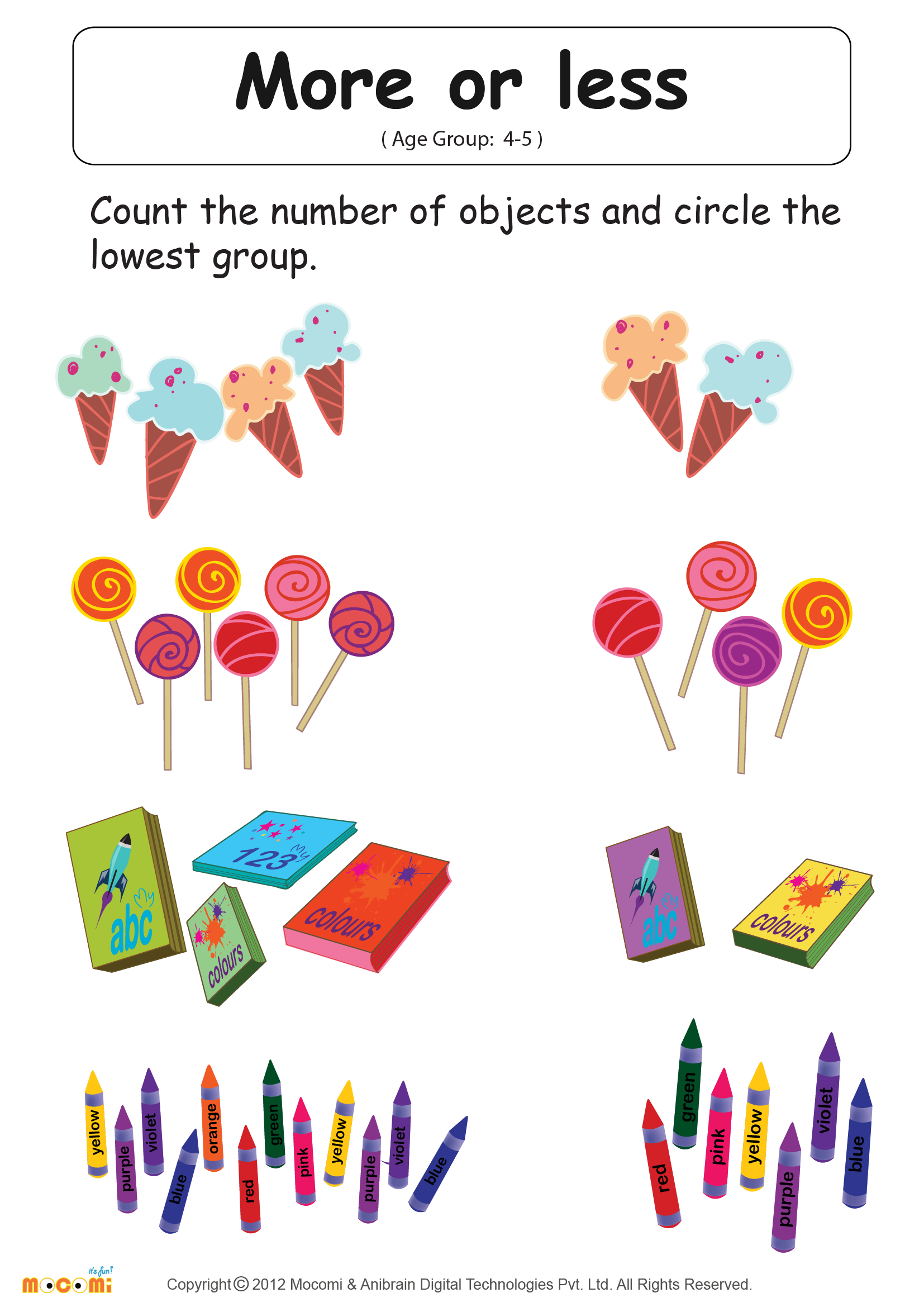
- Picture Comparison Worksheets: These worksheets often feature images of objects (like fruits, toys, or animals) that students must compare. They might ask students to circle the group with more items or cross out the group with less.
- Number Line Worksheets: Number lines can help children understand the concept of more and less in terms of numerical value. Students can mark points on the number line to indicate which number is greater or smaller.
- Fill-in-the-Blank Worksheets: These worksheets require students to complete sentences or problems by filling in the correct term, either “more” or “less,” based on the context provided.
- Interactive Worksheets: Some worksheets may involve cutting and pasting activities where students physically manipulate items to express more or less.
Choosing the right type of worksheet can enhance engagement and effectiveness. Consider your students’ preferences and learning styles when selecting resources.
How to Use More Or Less Worksheets Effectively
To maximize the learning experience with More Or Less Worksheets Kindergarten, here are some practical tips for educators and parents:
- Set Clear Objectives: Before introducing the worksheets, clarify what you want your students to learn. Are you focusing on visual comparisons, numerical understanding, or both? This will guide how you present the material.
- Incorporate Hands-On Activities: Pair the worksheets with hands-on activities. For example, use physical objects like blocks or counters. Have students create groups to visually represent “more” or “less” before completing the worksheets.
- Review Together: After students complete the worksheets, review the answers as a group. Discuss why certain quantities are more or less and encourage students to explain their reasoning.
- Differentiate Instruction: Not all students learn at the same pace. Provide different worksheets for varying skill levels, ensuring that each child is appropriately challenged without feeling overwhelmed.
- Use Real-Life Examples: Connect the worksheet activities to real-life situations. For example, ask students to compare the number of books in two different piles or the number of pencils they have.
Downloading and Printing More Or Less Worksheets
Finding and using More Or Less Worksheets Kindergarten is easy. Here’s a step-by-step guide for downloading and printing these resources:
- Search for Reliable Sources: Look for websites that specialize in educational resources. Many sites offer free downloads or printable worksheets specifically designed for kindergarten math.
- Check File Formats: Most worksheets will be available in PDF format, which is ideal for printing. PDFs maintain formatting across different devices, ensuring that the worksheets look the same when printed.
- Select Appropriate Sizes: Standard letter size (8.5” x 11”) is commonly used for worksheets. Ensure that your printer settings are adjusted to this size to avoid any formatting issues.
- Use Quality Paper: If you plan to laminate the worksheets for repeated use, consider using cardstock. This material is more durable and holds up better than standard printer paper.
- Print Settings: When printing, opt for portrait orientation, as it typically works better for worksheets. If color printing is available, use it to enhance the visual appeal of the worksheets, especially for younger children.
Engaging Activities to Supplement Worksheets
While worksheets are a valuable resource, complementing them with engaging activities can enhance learning. Here are some activities that reinforce the concepts of more and less:
- Sorting Games: Have students sort objects into groups based on quantity. For example, they can sort buttons into piles of more or less.
- Classroom Comparisons: Use classroom items for comparison. For instance, compare the number of books on two shelves or the number of crayons in two boxes.
- Counting Games: Incorporate counting games where students count out loud and determine which group has more or less.
- Story Problems: Create simple story problems that involve more and less. For example, “If you have 5 apples and your friend has 3, who has more?”
These activities encourage active participation and help solidify the concepts learned through worksheets.









