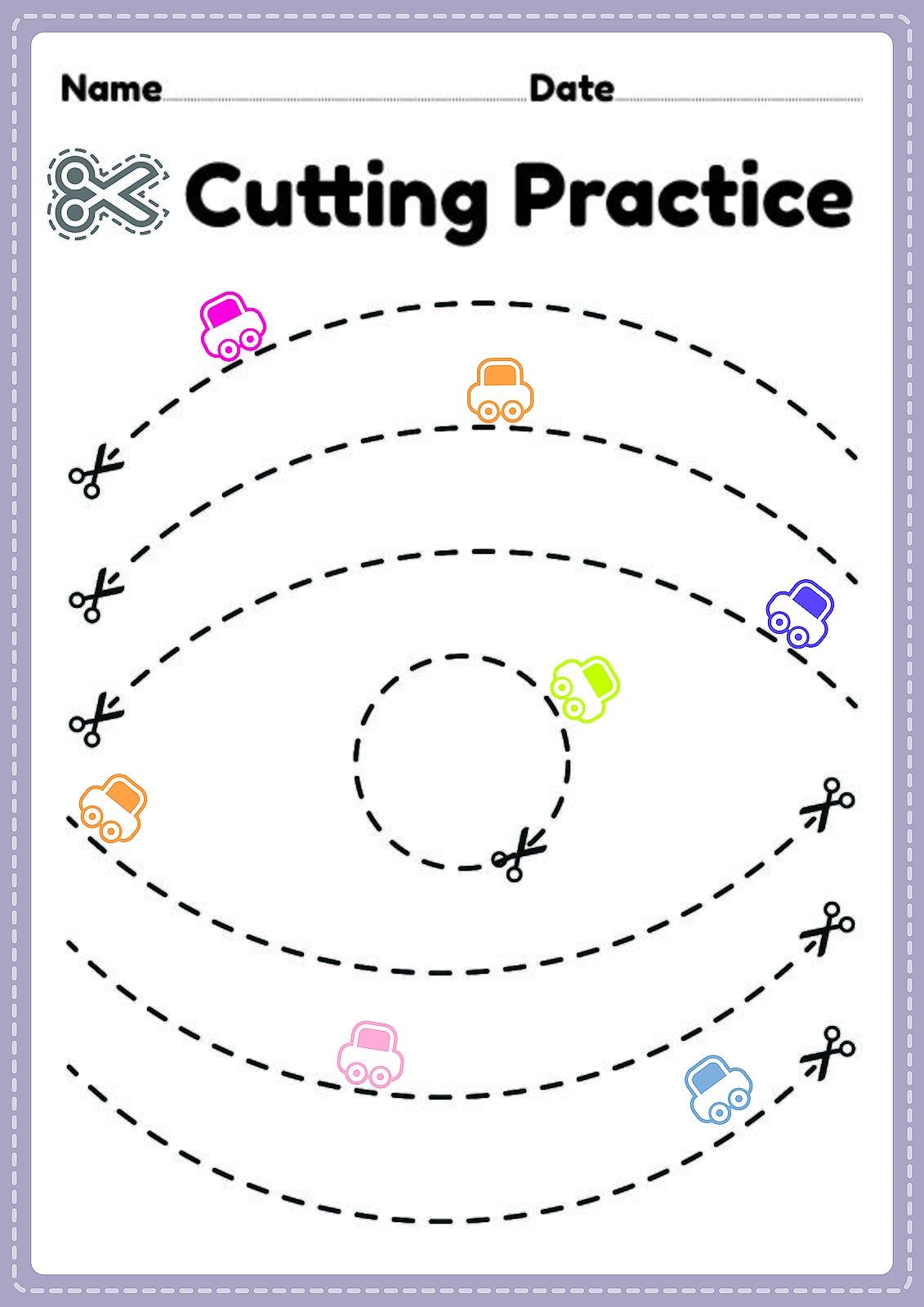
Introducing young learners to cutting practice is essential for developing their fine motor skills. These skills are foundational for various tasks, from writing to crafting. Cutting Practice Worksheets For Kindergarten serve as an engaging tool to help children master the use of scissors in a fun and educational way. In this article, you’ll learn how to choose, download, print, set up, and effectively use these worksheets in your classroom.
Understanding the Importance of Cutting Skills
Before diving into the details of cutting practice worksheets, let’s discuss why cutting skills are important. Mastering cutting helps children develop hand-eye coordination, improve dexterity, and gain confidence in their abilities. These skills are critical in preparing them for future academic tasks. Moreover, cutting can be a fun activity that promotes creativity, allowing children to express themselves through art and crafts.
Choosing the Right Cutting Practice Worksheets
When selecting cutting practice worksheets for your kindergarten class, consider the following factors:
- Skill Level: Ensure the worksheets are appropriate for kindergarteners. They should have simple lines and shapes for beginners, gradually increasing in complexity as skills improve.
- Theme and Engagement: Look for worksheets with engaging themes like animals, seasons, or holidays. Thematic worksheets can spark interest and make learning more enjoyable.
- Variety of Cuts: Worksheets that include straight lines, curves, and zigzags can provide a comprehensive practice experience. This variety helps children adapt to different cutting motions.
Many websites offer free or paid downloadable worksheets. Make sure to choose resources that are well-reviewed and widely used by educators.
Downloading and Printing Worksheets
Once you’ve chosen the cutting practice worksheets, the next steps are downloading and printing. Here’s how to do it effectively:
- Download the Worksheets: Most resources are available in PDF format, which is ideal for printing. Downloading the PDF ensures that the layout remains consistent and doesn’t get distorted.
- Printing Settings: Use standard letter-size paper (8.5 x 11 inches) for best results. If you have a color printer, opt for colored paper to make the worksheets visually appealing. Adjust the print settings to ‘fit to page’ to ensure the entire worksheet fits without being cut off.
- Paper Quality: Consider using cardstock for durability, especially if you plan to laminate the worksheets for repeated use. Cardstock can withstand handling better than regular printer paper.
Setting Up for Success
Creating an optimal environment for using cutting practice worksheets is crucial. Here’s how to set up your classroom:
- Workspace: Designate a cutting area with enough space for each child to work comfortably. Ensure that the tables and seats are at an appropriate height for kindergartners.
- Supplies: Provide child-safe scissors and additional supplies like glue sticks, crayons, and colored pencils. Having a variety of tools can encourage creativity during cutting activities.
- Demonstration: Before allowing children to work independently, demonstrate how to use scissors properly. Show them how to hold the scissors, how to position the paper, and the importance of cutting slowly and carefully.
Incorporating Worksheets Into Daily Activities
Integrating cutting practice worksheets into your daily classroom activities can enhance learning. Here are some practical ideas:
- Warm-Up Activity: Use cutting worksheets as a warm-up activity before more complex tasks. This can help children focus and prepare for the day’s lessons.
- Thematic Units: Incorporate cutting worksheets into thematic units. For example, during a unit on animals, provide worksheets with animal shapes for cutting, followed by discussions or projects related to those animals.
- Art Projects: After completing the worksheets, encourage children to use their cut-out shapes in art projects. They can create collages or other crafts, reinforcing both cutting skills and creativity.
Assessing Progress and Encouraging Improvement
Monitoring progress is essential when using Cutting Practice Worksheets For Kindergarten. Here’s how to assess and encourage improvement:
- Observation: Watch how students handle scissors and follow the lines on the worksheets. Take note of their dexterity and confidence levels.
- Provide Feedback: Offer specific feedback on their cutting skills. Praise their efforts and guide them on areas for improvement, such as holding scissors correctly or following lines more closely.
- Encourage Peer Review: Allow students to share their completed worksheets with peers. This not only fosters a supportive environment but also encourages them to learn from each other.









