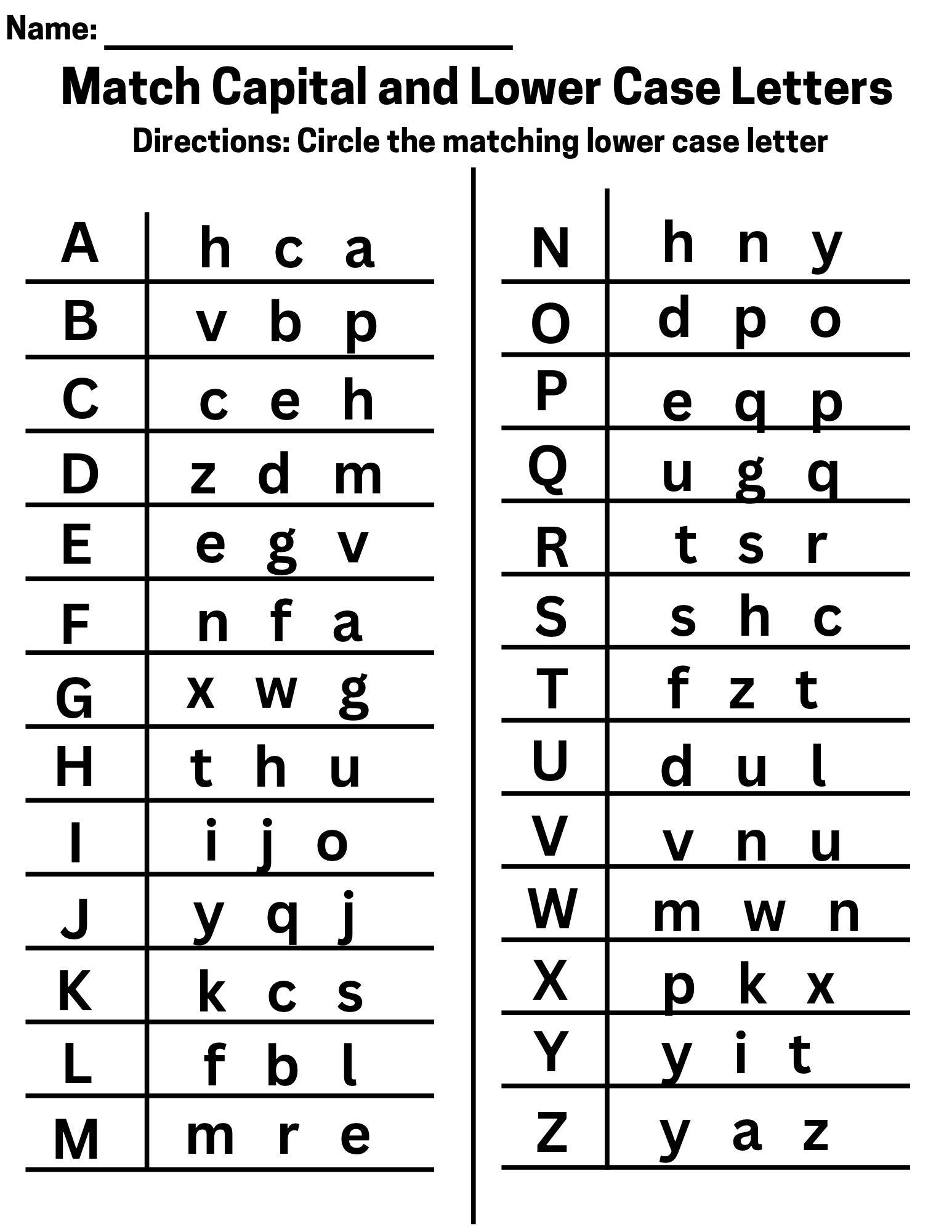
Teaching young learners to differentiate between capital letters and lowercase letters can be a rewarding experience. A well-designed Capital Letters And Lowercase Letters Matching Worksheet can significantly enhance their understanding and recognition of the alphabet. This worksheet serves as an engaging tool for both teachers and parents, allowing children to practice letter matching skills in a fun and interactive way.
Understanding the Importance of Letter Recognition
Letter recognition is a fundamental skill that lays the groundwork for reading and writing. When children can easily identify capital and lowercase letters, they build confidence in their literacy abilities. Recognizing letters is not just about memorizing shapes; it helps children understand that letters represent sounds and words. This knowledge is critical as they progress in their reading journey.
Using a Capital Letters And Lowercase Letters Matching Worksheet, educators and parents can reinforce these concepts in a structured manner. This worksheet encourages independent practice, allowing kids to work at their own pace while solidifying their understanding of the alphabet.
Features of the Matching Worksheet
A well-crafted matching worksheet typically includes several key features that enhance its usability and effectiveness:
- Clear Design: The worksheet should have a visually appealing layout that captures children’s attention without being overwhelming. Large, bold letters in contrasting colors can help guide young learners.
- Variety of Activities: Incorporating different activities, such as matching, circling, or coloring, keeps children engaged. This variety can cater to different learning styles, making the resource versatile.
- Age Appropriateness: Ideal for preschool and early elementary students, the worksheet should be designed with the developmental stage of the children in mind. Simple instructions and ample space for writing are essential.
- Downloadable Format: Providing the worksheet in a PDF format allows for easy printing without the risk of formatting issues. This ensures that the worksheet maintains its intended design across various devices.
How to Prepare the Worksheet for Use
Once you have downloaded the Capital Letters And Lowercase Letters Matching Worksheet, preparing it for use is straightforward. Here are some practical steps:
- Choose the Right Paper: For durability, consider using cardstock or heavy-weight paper. This is especially important if you plan to laminate the worksheet for repeated use.
- Printer Settings: Set your printer to the highest quality setting to ensure crisp, clear letters. If your printer has an option for borderless printing, use it to maximize the worksheet’s surface area.
- Size Adjustments: The standard size for printing worksheets is 8.5” x 11” (letter size). Make sure not to adjust the size unless you want to fit the worksheet to a different format.
- Lamination: If you laminate the worksheet, use a thermal laminator for best results. Laminating allows for dry-erase markers to be used, making the resource reusable.
- Cutting and Binding: If the worksheet has multiple pages, consider binding them together or using a clipboard for easy handling.
Effective Strategies for Using the Worksheet
To maximize the educational value of the Capital Letters And Lowercase Letters Matching Worksheet, implement these strategies during your teaching sessions:
- Model the Activity: Before allowing students to work independently, demonstrate how to match capital and lowercase letters. Use clear examples to show the differences between the two.
- Encourage Peer Collaboration: Pair students to work on the worksheet together. This not only fosters social interaction but also encourages them to discuss their thought processes and reasoning.
- Incorporate Movement: If possible, create a game where students can physically match letters found around the classroom with their worksheet. This kinesthetic approach can reinforce their learning.
- Use Verbal Reinforcement: As students work through the worksheet, provide positive feedback and encouragement. Ask them to say the letter names aloud, reinforcing their recognition skills.
Adapting the Worksheet for Different Learning Needs
Every child is unique, and some may require additional support or modification of activities. Here are some ideas to adapt the Capital Letters And Lowercase Letters Matching Worksheet:
- Visual Aids: For children who struggle with visual recognition, consider using colored overlays or highlighting letters to draw attention to them.
- Phonetic Support: Pair each letter with a corresponding image or word that starts with that letter. This can help reinforce the connection between the letter and its sound.
- Simplified Instructions: For younger children or those with special needs, provide a simplified version of the worksheet with fewer letters or more visual cues.
- Incorporate Technology: If your classroom has access to tablets or computers, consider using digital versions of the worksheet that can provide instant feedback and interactive elements.
Where to Find Additional Resources
If you’re looking for more printable resources, many websites offer a variety of worksheets, planners, and templates. Some options include:
- Educational resource websites that specialize in early childhood education.
- Local educational supply stores that often have printable resources available.
- Online platforms that allow users to upload and share their custom worksheets.
By exploring these options, you can find complementary materials that enhance the learning experience for your students.
Next Steps After Downloading the Worksheet
Once you have your Capital Letters And Lowercase Letters Matching Worksheet ready, you can start implementing it in your teaching. Gather your students and explain the activity clearly, ensuring they understand what is expected. Monitor their progress, and be available to assist as needed. After they complete the worksheet, consider reviewing the answers together to reinforce learning.
This worksheet is not just a standalone activity; it can be part of a broader literacy unit. Encourage students to practice letter recognition through various activities, reinforcing their skills and building confidence in their reading abilities. With consistent practice and engaging resources, you’ll help your students thrive in their literacy journey.









