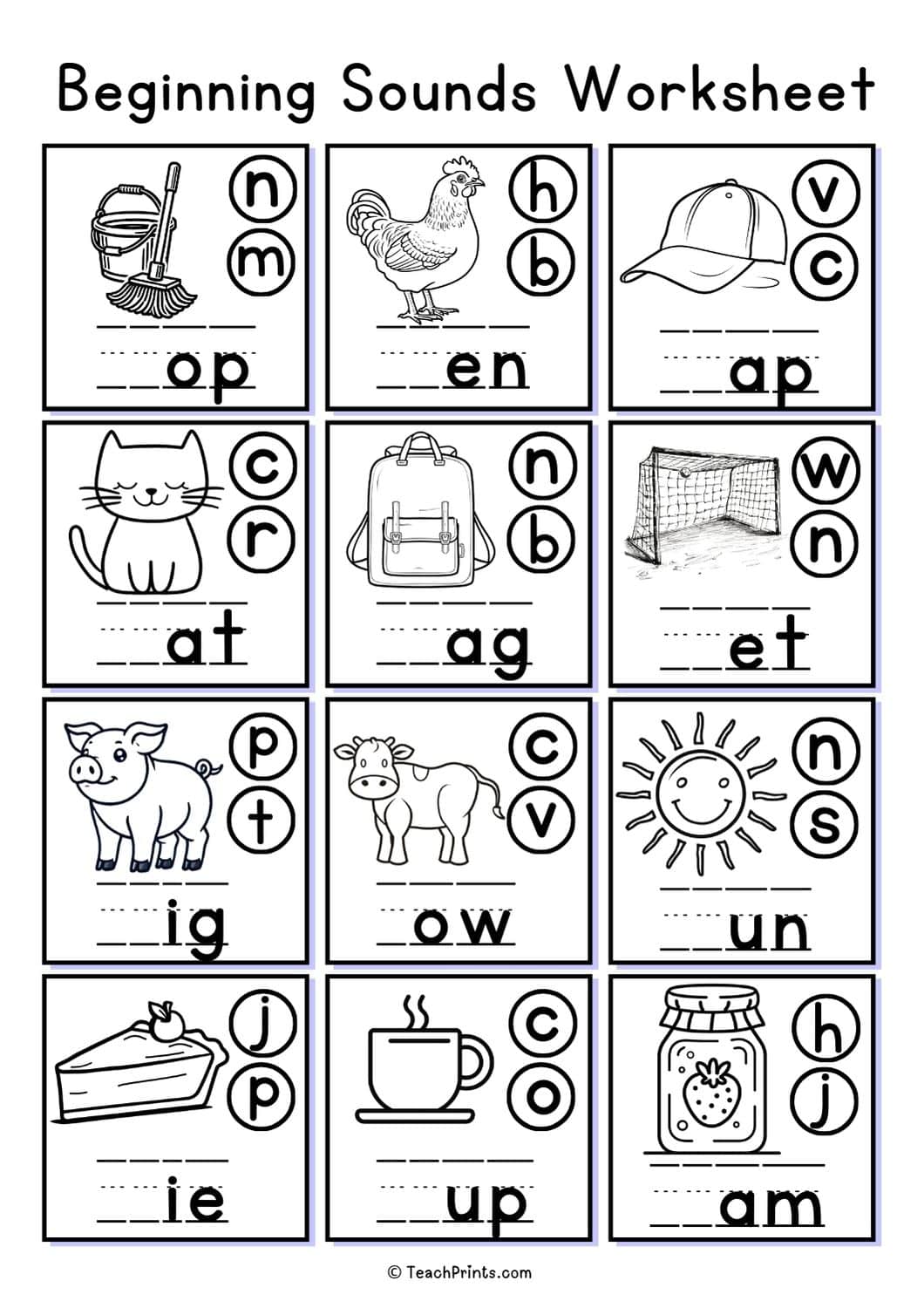
Beginning Sounds Worksheets For Kindergarten are essential tools that help young learners develop their phonetic skills. These worksheets typically come in a user-friendly format that allows teachers to integrate them seamlessly into their lesson plans. With various activities, children can practice identifying and writing beginning sounds, which is crucial for their reading development.
Understanding the Importance of Beginning Sounds
Beginning sounds are the first phonemes in words, and mastering them is vital for early literacy. Children who can identify these sounds are better equipped to decode words, making reading a more accessible skill. As a teacher, you’ll find that introducing these concepts through worksheets can enhance your students’ phonemic awareness.
Using Beginning Sounds Worksheets For Kindergarten allows you to track each child’s progress effectively. By assessing their ability to recognize and articulate these sounds, you can tailor your instruction to meet their individual needs. This focused approach not only improves literacy skills but also boosts student confidence.
Key Features of Effective Worksheets
When selecting Beginning Sounds Worksheets, look for specific features that enhance learning:
- Clear Layout: Worksheets should have a clean, organized design that is easy for young learners to navigate. A well-structured worksheet helps minimize distractions and allows students to focus on the task at hand.
- Variety of Activities: Effective worksheets should include a mix of activities such as matching sounds to pictures, filling in blanks, and tracing letters. This variety keeps students engaged and caters to different learning styles.
- Age-Appropriate Content: The content must be suitable for kindergarteners, with images and words that resonate with their everyday experiences. Familiarity helps children connect the sounds to real-life objects and concepts.
- Progress Tracking: Incorporate areas for teachers to note student progress. This could be simple checkboxes or spaces for comments, helping you monitor each child’s development over time.
Types of Activities to Include
Worksheets can feature a range of activities that reinforce beginning sounds. Here are some effective types you might consider:
Sound Matching
One popular activity is sound matching, where students draw lines between images and their corresponding beginning sounds. For instance, they might connect an image of a cat with the letter “C.” This helps with both recognition and motor skills as they draw.
Letter Tracing
Incorporating letter tracing activities can be beneficial for developing fine motor skills. Worksheets may include dotted letters that students can trace with crayons or pencils. This reinforces the connection between letter formation and sound pronunciation.
Picture Identification
Picture identification activities allow students to circle or color images that start with a specific sound. For example, if the focus is on the letter “S,” students might circle pictures of a snake, sun, and sock. This visual connection strengthens their understanding of beginning sounds.
Printable Formats and Easy Access
Most Beginning Sounds Worksheets For Kindergarten are available in PDF format, making them easy to download and print. PDFs are typically formatted to fit standard paper sizes, such as 8.5 x 11 inches, ensuring that they print clearly without any formatting issues.
Here are some practical tips for printing these worksheets:
- Print Settings: Use portrait layout for most worksheets, as this orientation often works best for classroom use. Adjust your printer settings for high-quality output to ensure that images and text are sharp.
- Paper Type: For worksheets that might be used multiple times, consider printing on cardstock. This heavier paper holds up well against wear and tear. If you’re planning to laminate the worksheets for reuse, cardstock is a great choice.
- Download Options: Look for resources that offer immediate downloads. Instant access means you can print and use the worksheets right away without having to wait for delivery or shipping.
Incorporating Worksheets Into Lesson Plans
To maximize the effectiveness of Beginning Sounds Worksheets, integrate them into your daily lesson plans. Choose a specific day for phonics practice and use the worksheets as a core component of that lesson. Here’s how to structure your lesson:
- Introduction: Start with a brief review of the sounds you’ve been covering. Use visual aids or flashcards to reinforce recognition.
- Worksheet Activity: Distribute the worksheets and explain the tasks. Encourage students to work independently or in pairs, fostering collaboration.
- Group Review: After the activity, gather the students to discuss their answers. This group review not only reinforces learning but also allows you to address any misconceptions.
- Assessment: Use the progress tracking sections to note how each student performed. This information will help you adjust your teaching strategies moving forward.
Additional Resources for Teachers
Beyond worksheets, consider supplementing your phonics lessons with other resources. Here are some suggestions:
- Interactive Games: Utilize online phonics games that focus on beginning sounds. These can provide a fun break from worksheets while reinforcing the same skills.
- Storybooks: Read aloud books that emphasize phonics and beginning sounds. Choose stories with repetitive phrases or alliteration, as they can help students hear the sounds in context.
- Flashcards: Flashcards featuring letters and corresponding pictures can be a quick and effective way to reinforce learning. Use them for quick drills or games during transition times.









