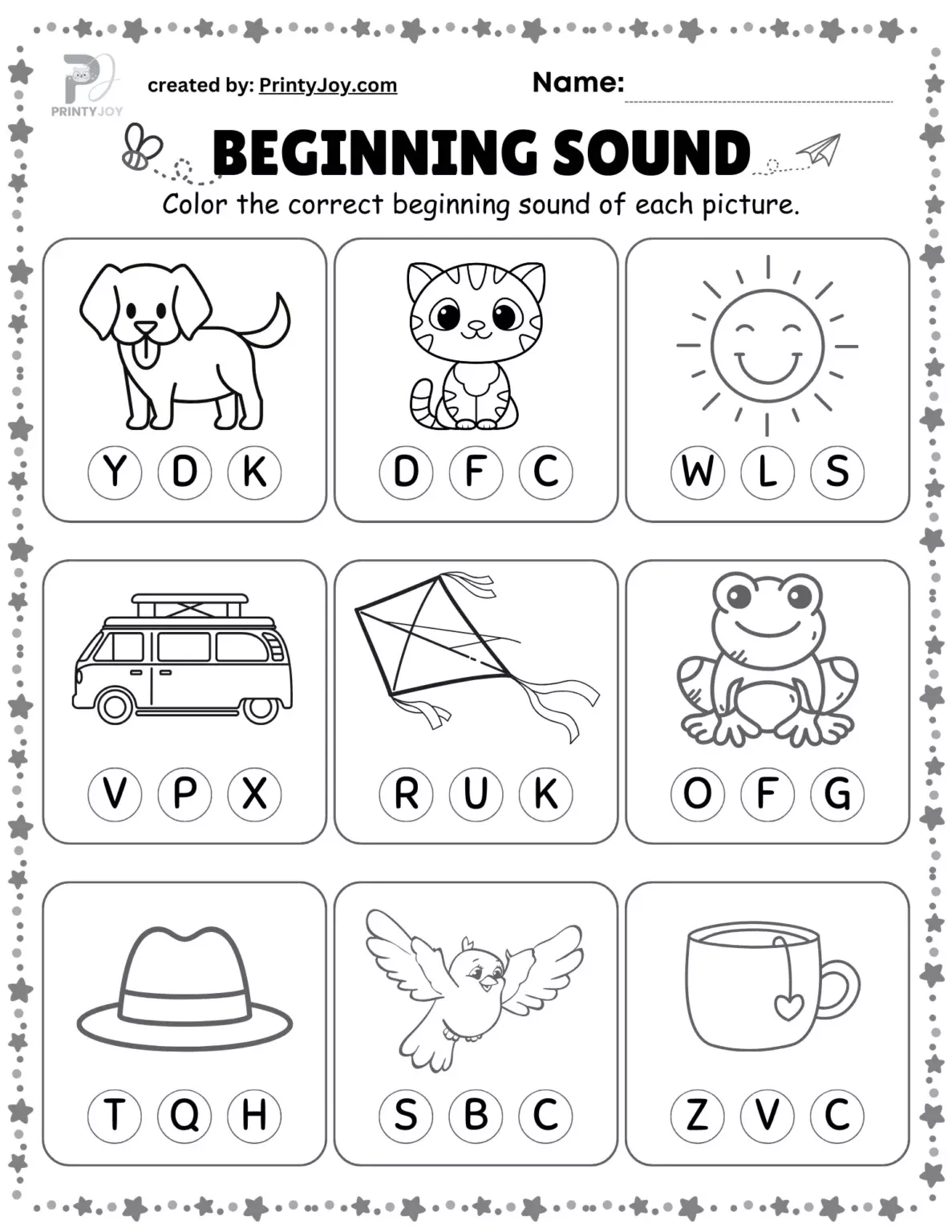
Beginning Sound Worksheets For Preschool are essential tools for introducing young learners to the foundational skills of phonics. These worksheets help preschoolers recognize and connect sounds with letters, laying the groundwork for reading and writing. Using these resources effectively can make a significant difference in your classroom, engaging your students and enhancing their language skills.
Understanding the Importance of Beginning Sounds
Beginning sounds are the initial sounds of words, which are crucial in phonetic awareness. Recognizing these sounds helps children decode words, facilitating their reading skills. Worksheets focused on beginning sounds can help children:
- Identify and articulate the initial sounds in words.
- Associate sounds with corresponding letters.
- Develop listening skills necessary for language acquisition.
Incorporating Beginning Sound Worksheets For Preschool into your lesson plans can provide structured practice that reinforces these critical skills.
Types of Beginning Sound Worksheets
When choosing Beginning Sound Worksheets For Preschool, consider the various types available. Each type serves specific educational purposes:
Picture-Based Worksheets
These worksheets typically feature images alongside letters. Students are tasked with identifying the beginning sound of each picture. For example, a picture of an apple (A) or a cat (C) helps reinforce the connection between the sound and the letter.
Letter Matching Worksheets
In this format, children match images or words to the correct beginning letter. This helps them practice identifying which letters correspond to specific sounds. For instance, if they see a picture of a dog, they would match it with the letter D.
Tracing Worksheets
Tracing worksheets encourage fine motor skills while reinforcing sound-letter recognition. Children trace letters while saying the sounds out loud, which strengthens memory retention.
How to Use Beginning Sound Worksheets Effectively
To maximize the benefits of Beginning Sound Worksheets For Preschool, consider the following strategies:
Integrate With Phonics Lessons
Align worksheets with your phonics lessons. For example, if you’re focusing on the letter ‘B’, provide worksheets that feature words and pictures starting with ‘B’. This focused approach helps reinforce the lesson.
Incorporate Movement
Turn worksheet activities into games. For instance, after completing a worksheet, have children find objects in the classroom that start with the same sounds. This kinesthetic approach engages different learning styles and keeps students interested.
Encourage Group Work
Allow students to work in pairs or small groups on the worksheets. Collaborative learning can foster discussion about sounds and letters, enabling peer teaching. You might find that students learn better from each other.
Selecting the Right Printable Resources
When searching for Beginning Sound Worksheets For Preschool, ensure they are age-appropriate and engaging. Look for worksheets that:
- Feature colorful images that attract preschoolers’ attention.
- Offer a variety of activities to cater to different learning styles.
- Are easy to print and use in the classroom without requiring extensive preparation.
Downloadable Formats
Most resources are available in PDF format, which is ideal for printing. PDFs maintain formatting across devices and printers, ensuring that what you see is what you get. When downloading, check the resolution to ensure clarity when printed.
Paper Choices
For durability, consider printing on cardstock, especially if the worksheets will be used multiple times or laminated for reuse. Standard printer paper works for one-time use, but thicker paper can withstand more handling.
Tips for Printing and Preparing Worksheets
Before distributing Beginning Sound Worksheets For Preschool to your students, follow these practical tips:
- Print Settings: Use standard letter size (8.5 x 11 inches) for easy printing. If you’re using a color printer, ensure that the printer settings are adjusted to enhance color quality.
- Test Print: Always do a test print to ensure images are clear and text is legible. This helps avoid wasting paper on poorly printed worksheets.
- Lamination Options: If you want to reuse worksheets, consider laminating them. This allows for dry-erase markers to be used, making them suitable for repeated practice.
Engaging Activities to Supplement Worksheets
To further reinforce the concepts introduced in Beginning Sound Worksheets For Preschool, consider integrating additional activities:
Sound Games
Create sound scavenger hunts where children find items that start with specific letters. This hands-on approach complements worksheet learning and makes it fun.
Story Time
Read books that emphasize beginning sounds. Engage children by asking them to point out words that start with the same sounds as letters they’ve been learning.
Art Projects
Incorporate art by having children create their own picture-based worksheets. They can draw items that start with a particular letter and then present their creations to the class.
Tracking Progress
As you implement Beginning Sound Worksheets For Preschool, tracking student progress is crucial. Consider maintaining a checklist for each student that notes their ability to recognize beginning sounds. This can help identify areas where further practice is needed.
Assessment Methods
- Observation: Regularly observe students during activities to assess their understanding.
- Worksheets Evaluation: Review completed worksheets to see which sounds students struggle with. This insight can guide future lessons.









