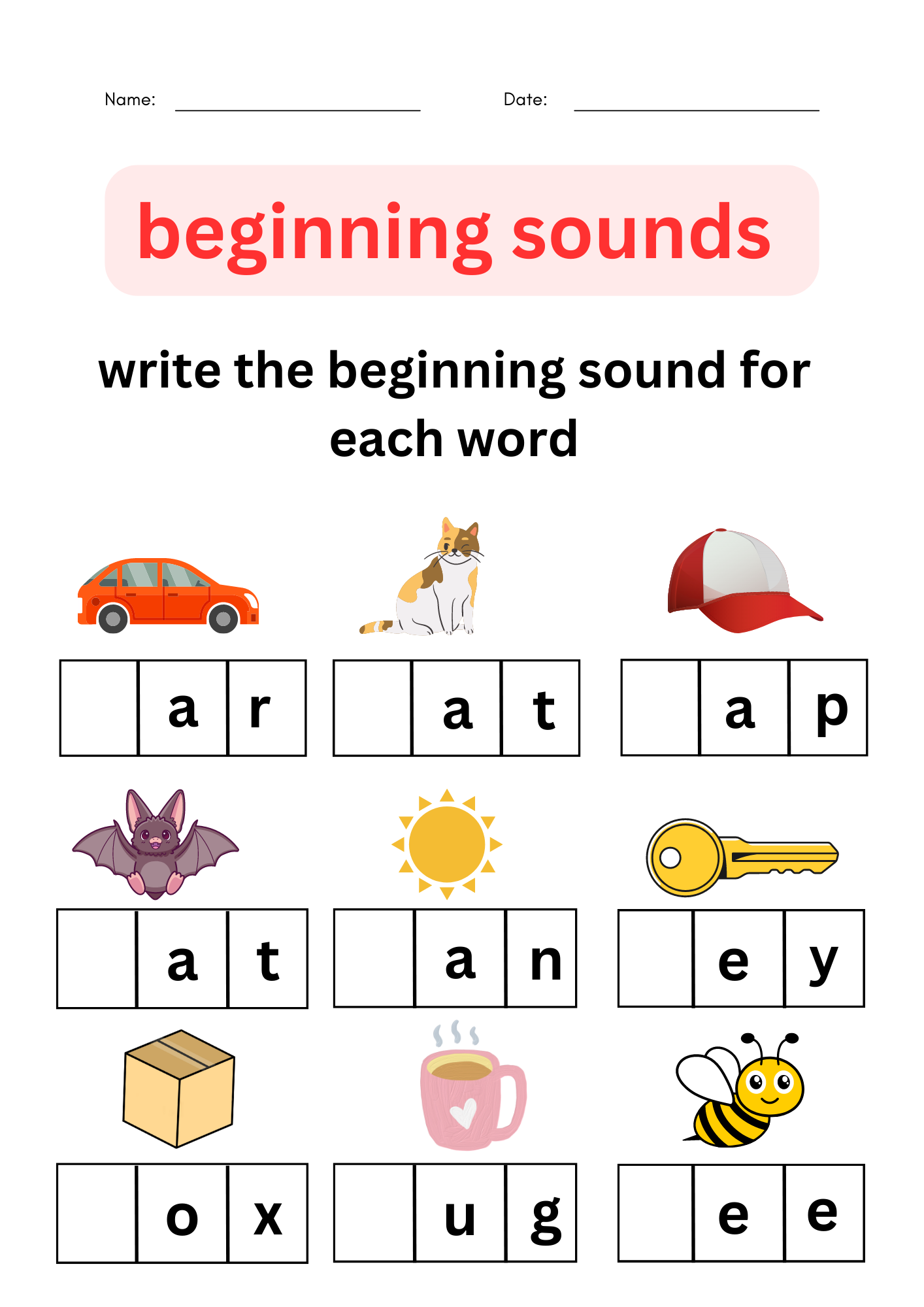
Beginning sound recognition is a fundamental skill for kindergarteners as they begin their journey into reading and writing. A well-crafted Beginning Sound Worksheet For Kindergarten can serve as a valuable resource in both classroom and home settings, helping young learners identify the initial sounds of words. explore how you can effectively implement this worksheet, monitor student progress, and create an engaging learning environment.
Understanding the Importance of Beginning Sounds
Before diving into the specifics of the worksheet, it’s crucial to understand why beginning sounds matter. Recognizing the initial sounds in words lays the groundwork for phonemic awareness, a critical component of reading success. Children who can identify beginning sounds are better equipped to decode words, which ultimately enhances their reading fluency and comprehension.
In a kindergarten classroom, you might notice students struggling with this skill. By using a Beginning Sound Worksheet, you can provide structured practice that reinforces their learning. This worksheet typically includes pictures and corresponding words, prompting students to identify the correct beginning sound for each image. For example, if a picture of a cat is shown, students would circle or write the letter “C.”
How to Use the Beginning Sound Worksheet
When introducing the Beginning Sound Worksheet For Kindergarten, consider the following steps to maximize its effectiveness:
- Prepare the Environment: Ensure that your classroom or home learning space is conducive to focus. Provide a quiet area with minimal distractions. Gather necessary supplies such as crayons or markers for coloring.
- Introduce the Concept: Start by explaining what beginning sounds are. Use simple language and examples. For instance, you might say, “The word ‘sun’ starts with the ‘s’ sound. Can you think of other words that start with ‘s’?”
- Model the Activity: Before handing out the worksheet, demonstrate how to complete it. Show how to look at a picture and identify the first sound. This modeling sets clear expectations and provides a visual reference for students.
- Guide Individual Practice: Give each student their worksheet and let them work independently or in pairs. As they complete the task, circulate around the room to offer support, encouragement, and feedback.
- Review and Assess: After the activity, review the completed worksheets together. Ask students to share their answers, fostering a sense of community and collaboration. This is also an excellent opportunity to assess their understanding and identify any areas needing further practice.
Tracking Progress With the Worksheet
Monitoring student progress is key to ensuring mastery of beginning sounds. Here are some practical strategies to assess their skills using the Beginning Sound Worksheet:
- Check for Accuracy: Look for correct identifications of beginning sounds. This will give you a clear picture of which students are grasping the concept and which may need additional support.
- Use Anecdotal Notes: As you observe students working, take notes on their verbal responses and interactions. This qualitative data can help you understand each child’s thought process and level of engagement.
- Create a Progress Chart: Consider developing a simple chart that tracks each student’s progress over time. You can note how many worksheets they complete accurately or how their confidence grows during discussions.
- Encourage Self-Reflection: After completing the worksheet, ask students how they feel about their understanding of beginning sounds. This can foster a growth mindset and encourage them to take ownership of their learning journey.
Enhancing Engagement With Interactive Activities
To supplement the Beginning Sound Worksheet, consider incorporating interactive activities that reinforce the same concepts. Here are a few engaging ideas:
- Sound Sorting Games: Use objects or pictures and have students sort them based on their beginning sounds. This hands-on activity caters to different learning styles and promotes active participation.
- Letter Sound Hunt: Create a scavenger hunt where students find items around the classroom or home that start with specific letters. This connects the worksheet to real-world experiences.
- Phonics Songs and Rhymes: Use songs that emphasize beginning sounds. Music can make learning fun and memorable, helping children recall sounds more easily.
- Story Time: Read books that focus on specific beginning sounds. Discuss the words and their sounds during and after reading, reinforcing the lesson in context.
Tips for Different Learners
Every child learns at their own pace. Here are some tailored tips to help accommodate various learning styles and levels:
- For Visual Learners: Use colorful images and illustrations on the worksheet. Consider laminating the worksheets for reuse, allowing students to use dry-erase markers to circle answers.
- For Kinesthetic Learners: Incorporate movement into your lessons. Have students act out the sounds or move to different areas of the room to match objects with their beginning sounds.
- For Advanced Learners: Challenge these students with more complex words or encourage them to come up with additional examples beyond what is on the worksheet.
- For Struggling Learners: Provide one-on-one support, breaking down the activity into smaller steps. Use more familiar words and pictures to build confidence.
Practical Considerations for Implementation
When planning to use the Beginning Sound Worksheet For Kindergarten, here are a few practical considerations:
- Print Settings: Use standard letter-sized (8.5 x 11 inches) paper for easy printing. If using color, ensure your printer settings are adjusted for vibrant results.
- Durability: If you plan to use the worksheet multiple times, consider printing it on cardstock. This will make the sheets sturdier, especially in a busy classroom environment.
- Laminating for Reuse: Laminating the worksheets allows for easy cleaning and repeated use. Students can use dry-erase markers to complete their work, making it an eco-friendly option.
- Accessibility: Ensure that the worksheets are accessible to all students, including those with learning disabilities. You may need to modify the content or provide additional resources.
By integrating the Beginning Sound Worksheet into your teaching strategy, you create an enriching environment that encourages literacy development. Remember that tracking progress and adapting to students’ needs will enhance their learning experience and foster a love for reading. With these practical tips and engaging activities, you can make learning beginning sounds both effective and enjoyable for your kindergarteners.









