Fill in the blank worksheets are versatile tools that can greatly enhance learning at home or in a homeschool setting. These resources help reinforce key concepts across various subjects by allowing students to actively engage with the material. Whether you’re working on vocabulary, math facts, or even creative writing, a Fill In The Blank Worksheet can provide a structured yet flexible way for students to practice their skills.
What is a Fill In The Blank Worksheet?
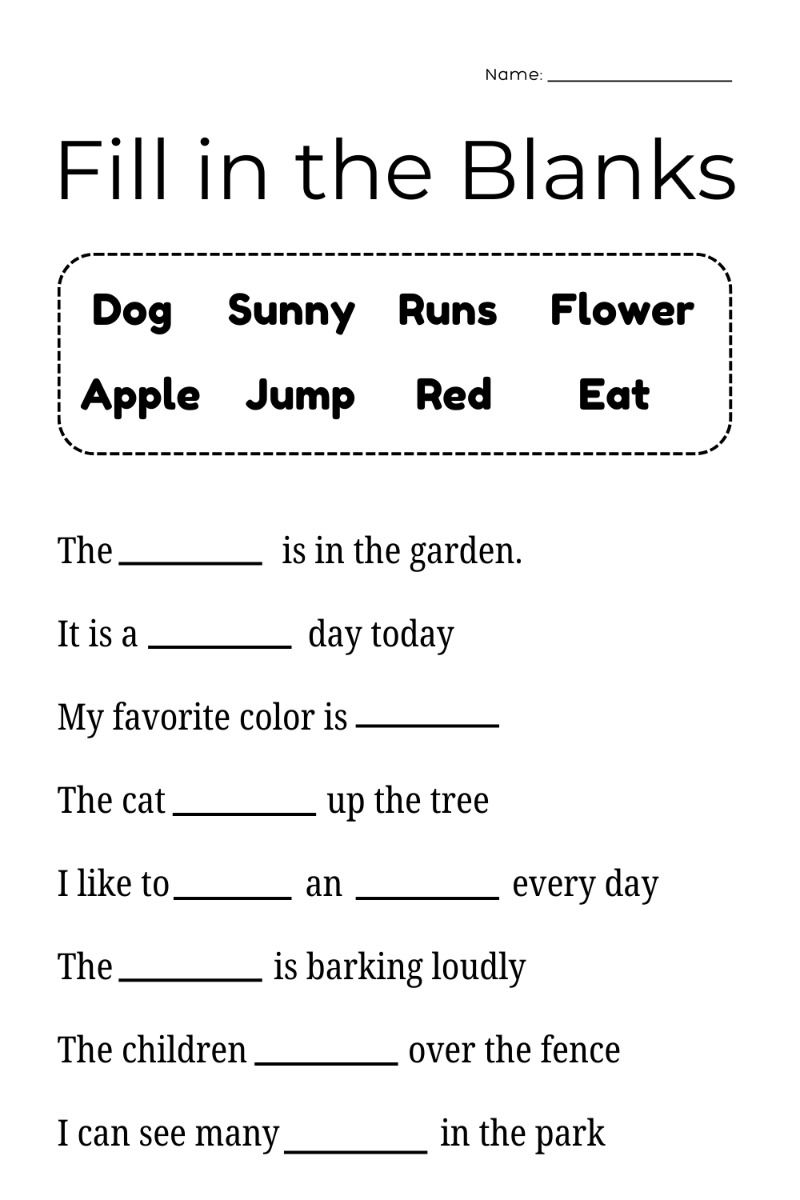
A Fill In The Blank Worksheet consists of sentences or phrases with certain words omitted, leaving blank spaces for students to fill in the missing information. This format encourages active participation and can be tailored to suit various subjects and age levels. You can create worksheets for different topics, such as:
- Vocabulary development
- Science facts
- Historical events
- Math equations
The primary goal is to reinforce learning by prompting students to recall information and apply it in context. These worksheets are especially effective for younger students, typically ranging from kindergarten through middle school, who are developing their foundational skills in reading, writing, and critical thinking.
Benefits of Using Fill In The Blank Worksheets
Using Fill In The Blank Worksheets in your home or homeschool routine can offer several advantages:
- Active Engagement: Students must actively recall information to fill in the blanks, which reinforces memory retention.
- Flexible Learning: Worksheets can be adapted to various subjects and topics, making them a versatile resource for different learning needs.
- Assessment Tool: They can serve as an informal assessment to gauge a student’s understanding of a subject.
- Encourages Critical Thinking: Students are prompted to think critically about what fits in the blank, enhancing their analytical skills.
By utilizing these worksheets, you can create a dynamic learning environment that encourages exploration and curiosity.
How to Create Effective Fill In The Blank Worksheets
Creating your own Fill In The Blank Worksheets can be simple and tailored to your specific needs. Here’s a step-by-step guide:
- Choose a Subject: Decide on the topic you want to focus on. This could be anything from a recent lesson in history to vocabulary words from a book being read.
- Draft Sentences: Write sentences that incorporate the key concepts. Make sure to leave out words that are essential for understanding, typically nouns, verbs, or adjectives.
- Select Words to Omit: Choose which words to leave blank. Ensure that the omitted words are crucial for the comprehension of the sentence.
- Format the Worksheet: Arrange the sentences in a clear layout. You can use bullet points or numbered lists to make it easier for students to follow.
- Provide Instructions: Include a brief set of instructions at the top of the worksheet, explaining what students need to do.
- Review and Test: Before using the worksheet, review it to ensure that it flows logically and that the omitted words are those that will best test the students’ knowledge.
Practical Tips for Using Fill In The Blank Worksheets at Home
To maximize the effectiveness of Fill In The Blank Worksheets in your home or homeschool setting, consider these practical tips:
- Combine with Other Activities: Use the worksheets alongside other educational activities, such as reading or hands-on projects. This can help reinforce learning in multiple ways.
- Set a Routine: Incorporate the worksheets into your daily or weekly routine. Regular practice will help reinforce the material being covered.
- Encourage Discussion: After completing the worksheet, engage your child in a discussion about the answers. This will help deepen their understanding and encourage critical thinking.
- Use in Different Formats: Depending on the subject, consider using digital worksheets or printable versions that can be easily filled in. This can add variety and keep the learning process fresh.
- Adapt for Different Levels: Tailor the difficulty of the worksheets to match your child’s learning level. For younger students, keep sentences simple; for older students, incorporate more complex ideas.
Examples of Fill In The Blank Worksheets
Here are a few examples of how Fill In The Blank Worksheets can be applied across different subjects:
Language Arts
Create a worksheet based on a story your child has read. Leave out key vocabulary words or character names for them to fill in. For instance:
“The _ went to the market to buy _.”
Math
Develop a math-focused worksheet where students fill in missing numbers or operations. For example:
“5 + _ = 10.”
Science
Design a worksheet that covers basic science facts. For example:
“The process by which plants make food is called _.”
History
Use historical events to create fill-in-the-blank sentences. For example:
“The _ was signed in 1776, declaring independence from Britain.”
Each of these examples encourages students to engage with the material actively and can be adapted for various levels of understanding.
Where to Find Printable Fill In The Blank Worksheets
Many online resources offer free printable Fill In The Blank Worksheets. Here are a few places to start:
- Educational Websites: Sites like Teachers Pay Teachers or Education.com often have ready-made worksheets that you can download and print.
- Homeschool Resources: Many homeschooling websites provide worksheets tailored to specific subjects and grade levels.
- DIY Options: If you prefer to create your own, consider using word processing software or online tools that allow you to design custom worksheets easily.
When printing, remember that using high-quality paper can enhance the durability of the worksheets, especially if you plan to reuse them. Cardstock can hold up better for repeated use, and portrait layout generally works best for home printers.
Adapting Fill In The Blank Worksheets for Different Learning Styles
To cater to various learning styles, consider adapting your Fill In The Blank Worksheets accordingly:
- Visual Learners: Incorporate images or diagrams alongside the sentences. For example, use a picture of a plant when discussing photosynthesis.
- Auditory Learners: Read the sentences aloud and have students fill in the blanks as they listen. This can reinforce learning through auditory processing.
- Kinesthetic Learners: Turn the worksheet into a hands-on activity. Have students act out the sentences or use physical objects to represent the missing words.
By tailoring the worksheets to fit different learning styles, you can ensure that all students are engaged and able to grasp the material effectively.
Next Steps After Completing the Worksheets
Once your child has completed the Fill In The Blank Worksheet, consider the following next steps to reinforce learning:
- Review Answers Together: Go through the answers and discuss any mistakes. This can help clarify misunderstandings and reinforce learning.
- Create More Worksheets: Encourage your child to create their own Fill In The Blank Worksheets based on what they have learned. This can deepen their understanding and make learning more interactive.
- Integrate into Daily Life: Use concepts from the worksheets in everyday conversations or activities. This helps to reinforce knowledge outside of formal learning settings.
By actively engaging with Fill In The Blank Worksheets and following these practical steps, you can create a more enriching learning experience for your child, fostering a love for learning that extends beyond the worksheet itself.









