Effective teaching requires tools that not only engage students but also simplify the learning process. One such resource that has proven beneficial in classrooms is the Fill In The Blanks Worksheets. These worksheets serve as an excellent way to reinforce language skills, vocabulary, and comprehension across various subjects. They can be tailored to different grade levels and topics, making them versatile for any educator’s toolkit.
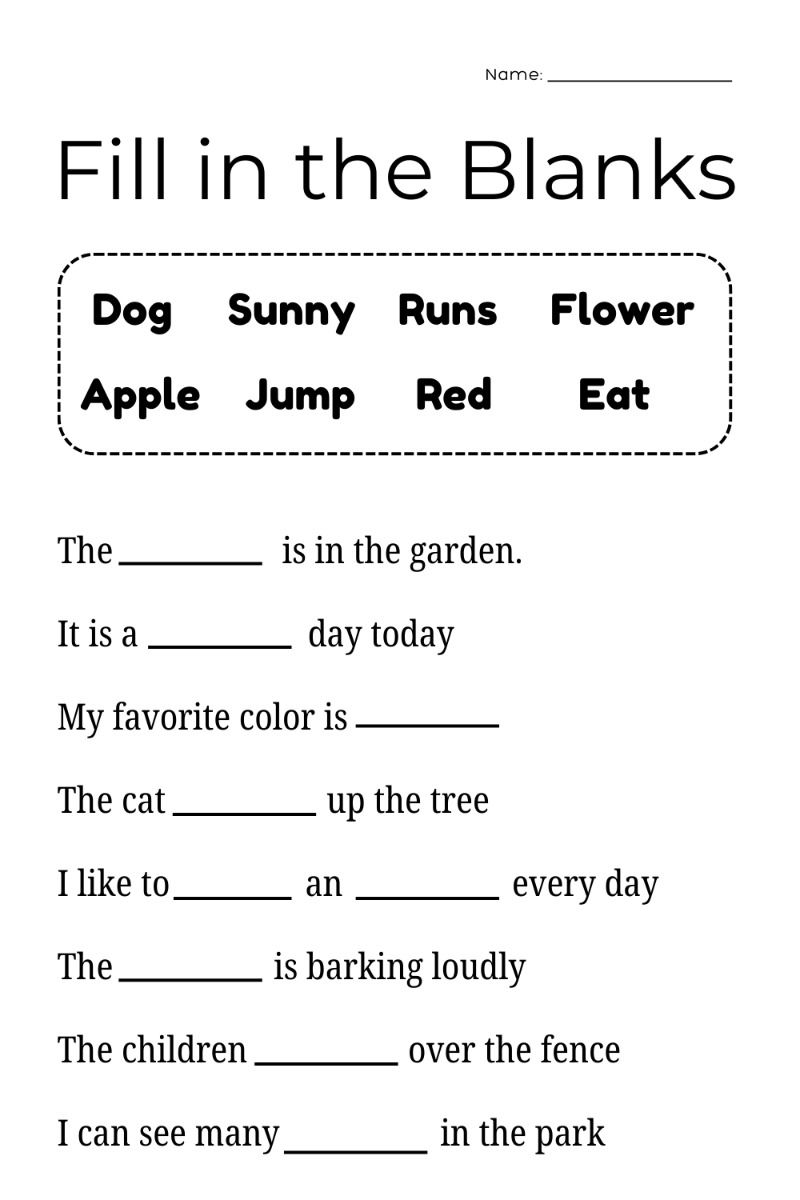
Understanding Fill In The Blanks Worksheets
Fill In The Blanks Worksheets are designed to encourage students to think critically about context and word usage. By providing sentences with missing words, these worksheets prompt students to use their existing knowledge to fill in the gaps. This method not only enhances vocabulary but also improves reading comprehension and contextual understanding.
These worksheets can cover a wide range of topics, including grammar, math vocabulary, science terminology, and even literature. For instance, a language arts worksheet might focus on verb conjugations, while a science worksheet could target key terms related to ecosystems.
Choosing the Right Fill In The Blanks Worksheets
When selecting Fill In The Blanks Worksheets for your classroom, consider the following factors:
- Grade Level: Ensure the difficulty level matches your students’ abilities. Worksheets aimed at younger students should be simpler, while those for older students can include more complex concepts.
- Subject Matter: Align worksheets with your curriculum. For instance, if you’re teaching a unit on animals, look for worksheets that focus on related vocabulary.
- Engagement: Choose worksheets that are visually appealing and engaging. Worksheets with illustrations or themes relevant to your students can enhance interest and participation.
- Adaptability: Look for worksheets that can easily be modified to suit different learning styles or to incorporate additional challenges for advanced students.
Downloading and Printing Fill In The Blanks Worksheets
Once you’ve identified the appropriate Fill In The Blanks Worksheets, the next step is to download and print them. Here’s how:
- Download: Most printable resources are available in PDF format. This format ensures that the document maintains its layout and design when printed. Look for high-quality PDFs to avoid any issues with resolution.
- Print Settings: When printing, set your printer to the correct paper size — typically 8.5 x 11 inches for standard worksheets. If using a color printer, ensure your settings are adjusted to print in color for enhanced visuals.
- Paper Choice: For durability, consider using cardstock or heavier paper, especially if the worksheets will be reused or handled frequently.
- Check Alignment: Before printing multiple copies, print a test page to check alignment and margins. This step helps prevent wasting resources on misaligned prints.
Setting Up Fill In The Blanks Worksheets in Your Classroom
Integrating Fill In The Blanks Worksheets into your lesson plans can be straightforward. Here’s a step-by-step guide to effectively use them:
- Introduce the Topic: Begin by introducing the subject matter related to the worksheet. Provide context and examples to help students understand what is expected.
- Distribute the Worksheets: Hand out the worksheets and ensure each student understands the instructions. Allow them to ask questions if they need clarification.
- Encourage Collaboration: Consider allowing students to work in pairs or small groups. This can foster discussion and help them learn from each other.
- Monitor Progress: As students work, circulate the room to offer assistance and observe their understanding. This can help you identify areas where students might need additional support.
- Review Answers: After completion, review the answers as a class. This reinforces learning and allows you to address any misconceptions.
Tracking Student Progress With Fill In The Blanks Worksheets
Using Fill In The Blanks Worksheets can also be an effective way to track student progress. Here’s how to utilize them for assessment:
- Collect Completed Worksheets: Gather the worksheets after students have completed them. This will give you a clear picture of each student’s understanding of the material.
- Analyze Responses: Look for common errors or patterns in student answers. This can help you identify topics that may need further review.
- Provide Feedback: Give constructive feedback on their performance. Highlight strengths and suggest areas for improvement.
- Use as a Benchmark: Keep a record of completed worksheets to track progress over time. This can serve as a benchmark for future assessments.
Customizing Fill In The Blanks Worksheets
To maximize the effectiveness of Fill In The Blanks Worksheets, consider customizing them to fit your classroom needs. Here are a few tips:
- Create Your Own: If you can’t find the perfect worksheet, create your own using templates. This allows you to tailor the content specifically to your curriculum.
- Incorporate Thematic Elements: Add themes related to holidays, seasons, or student interests to make the worksheets more engaging.
- Adjust Difficulty Levels: Modify existing worksheets to adjust the number of blanks or the complexity of the vocabulary used. This helps cater to different learning paces.
- Include Visuals: Adding images or illustrations can help students understand context better and make the worksheets more appealing.
- Utilize Technology: Consider using digital Fill In The Blanks Worksheets that can be completed online. This can be particularly useful for remote learning environments.
By effectively using Fill In The Blanks Worksheets, you can enhance your students’ learning experiences while also tracking their progress in a meaningful way. Take a few minutes today to find, download, and prepare your next set of worksheets to enrich your classroom activities. Remember, the right resource can make all the difference in your teaching journey.









