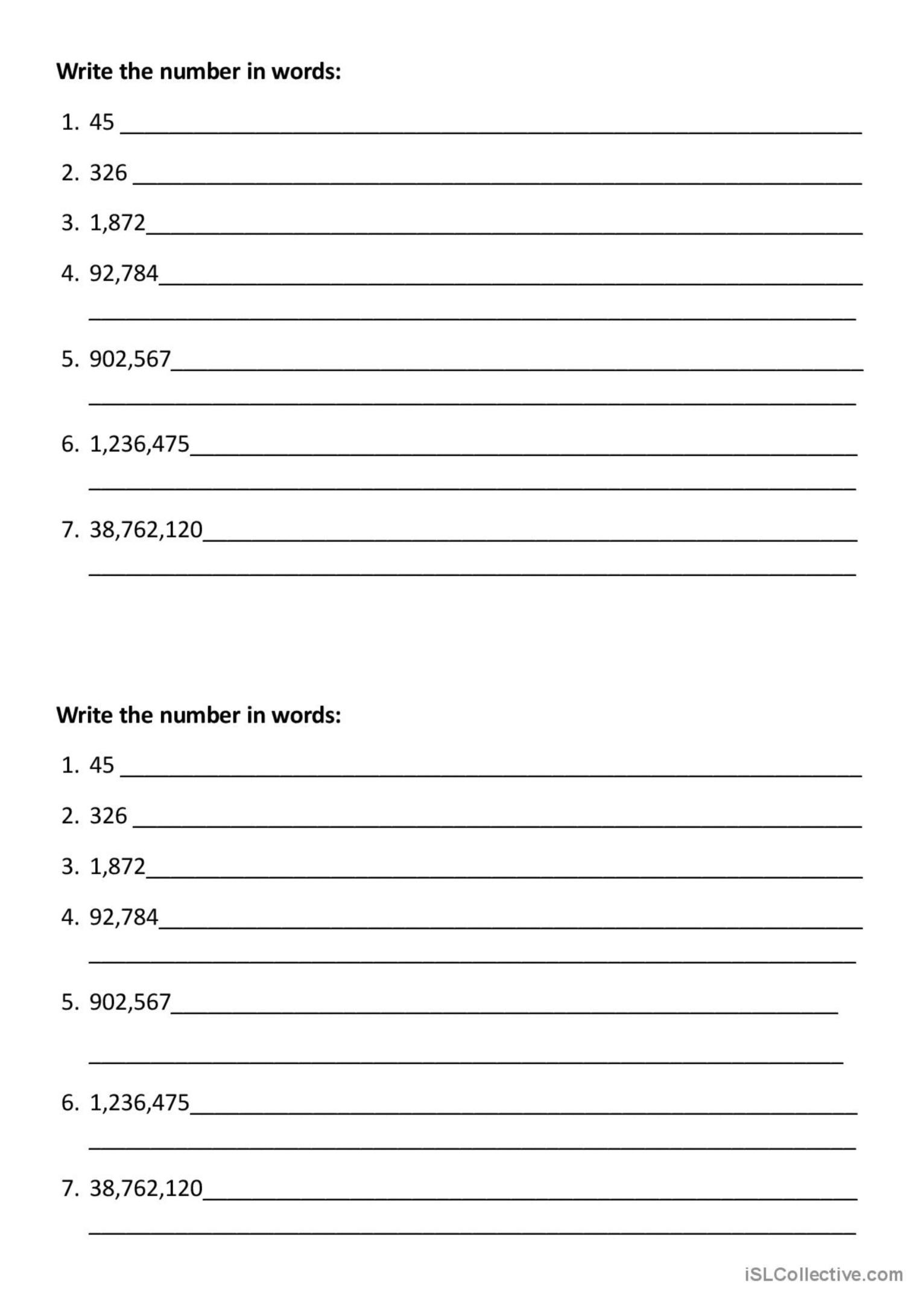
Writing big numbers in words can be a challenging task for students, but with the right resources, it becomes much easier to grasp. That’s where Writing Big Numbers In Words Worksheets come into play. These worksheets serve as a practical tool to help students practice and understand how to convert large numbers into their written forms. Not only do they reinforce math skills, but they also enhance students’ reading and comprehension abilities. Here’s how you can effectively use these worksheets in your classroom.
Understanding the Importance of Writing Big Numbers in Words
Converting numbers into words is not just a skill for elementary math; it builds a foundational understanding of place value, number sense, and effective communication. When students learn to write big numbers in words, they develop a deeper comprehension of numerical values. This skill is essential for various real-life applications, such as writing checks, understanding financial documents, and reading numerical data in reports.
By incorporating Writing Big Numbers In Words Worksheets into your lesson plans, you provide students with a hands-on approach to mastering this concept. The worksheets typically contain exercises that encourage students to practice translating numbers like 1,234,567 into “one million, two hundred thirty-four thousand, five hundred sixty-seven.” This practice not only makes the learning process engaging but also reinforces key mathematical principles.
Types of Worksheets Available
When searching for Writing Big Numbers In Words Worksheets, you’ll find various types tailored to different educational needs. Here are a few common formats:
- Printable PDF Worksheets: These are easily downloadable and can be printed on standard letter-sized paper (8.5 x 11 inches). PDFs also maintain formatting, ensuring that all text is clear and legible when printed.
- Interactive Digital Worksheets: Some resources offer interactive worksheets that can be filled out online. These can be beneficial for students who prefer digital learning environments, allowing them to practice writing big numbers in words without needing to print anything.
- Blank Worksheets: These worksheets provide a template for students to fill in numbers in words themselves. This format encourages creativity and individual expression while reinforcing the lesson.
- Answer Key Worksheets: These worksheets include the correct answers to ensure students can check their work. Providing an answer key can help students learn from their mistakes and improve their understanding.
When selecting a worksheet, consider the grade level and the specific learning objectives you want to achieve. Worksheets designed for younger students may include smaller numbers, while those for older students may challenge them with larger figures.
Preparing to Use the Worksheets
Before distributing the Writing Big Numbers In Words Worksheets, it’s essential to prepare both the materials and your classroom environment. Here are some practical tips:
- Choose the Right Paper: For durability, especially if the worksheets will be reused or laminated, consider printing on cardstock. If you’re simply handing them out for one-time use, standard printer paper works just fine.
- Printer Settings: Ensure your printer settings are adjusted for high-quality prints. The “Best” or “High Quality” print mode will help make the text sharp and clear, which is vital for readability.
- Layout Considerations: Portrait layout is generally more suitable for worksheets, as it aligns better with how students typically write. However, if your worksheet includes large numbers or charts, landscape orientation might be more effective.
- Classroom Setup: Depending on your classroom size and resources, consider whether students will work individually or in pairs. Small group work can foster collaboration and enhance understanding, allowing students to discuss and clarify their thought processes.
Engaging Students With Fun Activities
To make the learning process more enjoyable, consider integrating fun activities with the Writing Big Numbers In Words Worksheets. Here are some ideas:
- Games: Turn the worksheets into a competitive game. Divide students into teams and have them race to correctly convert numbers to words. This not only makes learning fun but also encourages teamwork.
- Real-Life Applications: Bring in real-world examples. Ask students to convert numbers from newspapers, magazines, or even their own financial documents into words. This practice helps them see the relevance of what they’re learning.
- Art Projects: Incorporate art by having students create posters that display big numbers in words alongside illustrations that represent the numbers. This creative approach reinforces learning through visual means.
Assessing Student Progress
To effectively assess how well your students are mastering the skill, consider using the following methods:
- Quizzes: After a few lessons, give a short quiz using a variety of numbers for students to convert into words. This helps you gauge their understanding and identify areas needing further review.
- Peer Review: Allow students to exchange their worksheets and check each other’s work. This promotes collaborative learning and reinforces their understanding through teaching.
- Feedback Sessions: After completing the worksheets, hold a class discussion where students can share their thought processes and any challenges they encountered. This encourages reflection and deeper learning.
Where to Find Quality Worksheets
When looking for Writing Big Numbers In Words Worksheets, you’ll find various online resources offering free and paid options. Websites like educational resource platforms, teaching blogs, and printable worksheet sites are excellent places to start. Here are a few tips for finding high-quality worksheets:
- Check Reviews: Look for resources that have good reviews from other educators. This can provide insight into the effectiveness of the worksheets.
- Preview Samples: Many sites allow you to preview worksheets before downloading. This can help ensure that the materials are appropriate for your students’ grade levels and learning goals.
- Customization Options: Some platforms offer customizable worksheets, allowing you to tailor the content to better fit your classroom needs. This can be especially useful if you want to focus on specific number ranges or formats.
Adapting Worksheets for Different Learning Styles
Every student learns differently, and it’s essential to adapt your teaching methods accordingly. Here are some ways to modify the Writing Big Numbers In Words Worksheets for various learning styles:
- Visual Learners: Incorporate color coding or visuals to help these students better understand the concepts. For instance, using different colors for different place values can enhance comprehension.
- Kinesthetic Learners: For hands-on learners, consider using physical objects like blocks or counters that represent numbers. They can physically manipulate these to reinforce the concepts before writing them down.
- Auditory Learners: Allow these students to verbalize their thought processes. Encourage them to read their written numbers aloud and explain how they arrived at their answers.
By catering to different learning styles, you create a more inclusive classroom environment where all students can thrive.
Next Steps After Downloading
Once you’ve chosen and downloaded your Writing Big Numbers In Words Worksheets, it’s time to get started! Print them out, gather your students, and introduce the topic with enthusiasm. Set clear objectives for each lesson and be prepared to provide support as needed.
Encourage your students to take their time with each worksheet, emphasizing the importance of accuracy over speed. As they work through the exercises, be available to offer guidance and encouragement.
By using these worksheets, you’re not just teaching your students how to convert numbers into words; you’re equipping them with valuable skills that will serve them well in their academic and personal lives.









