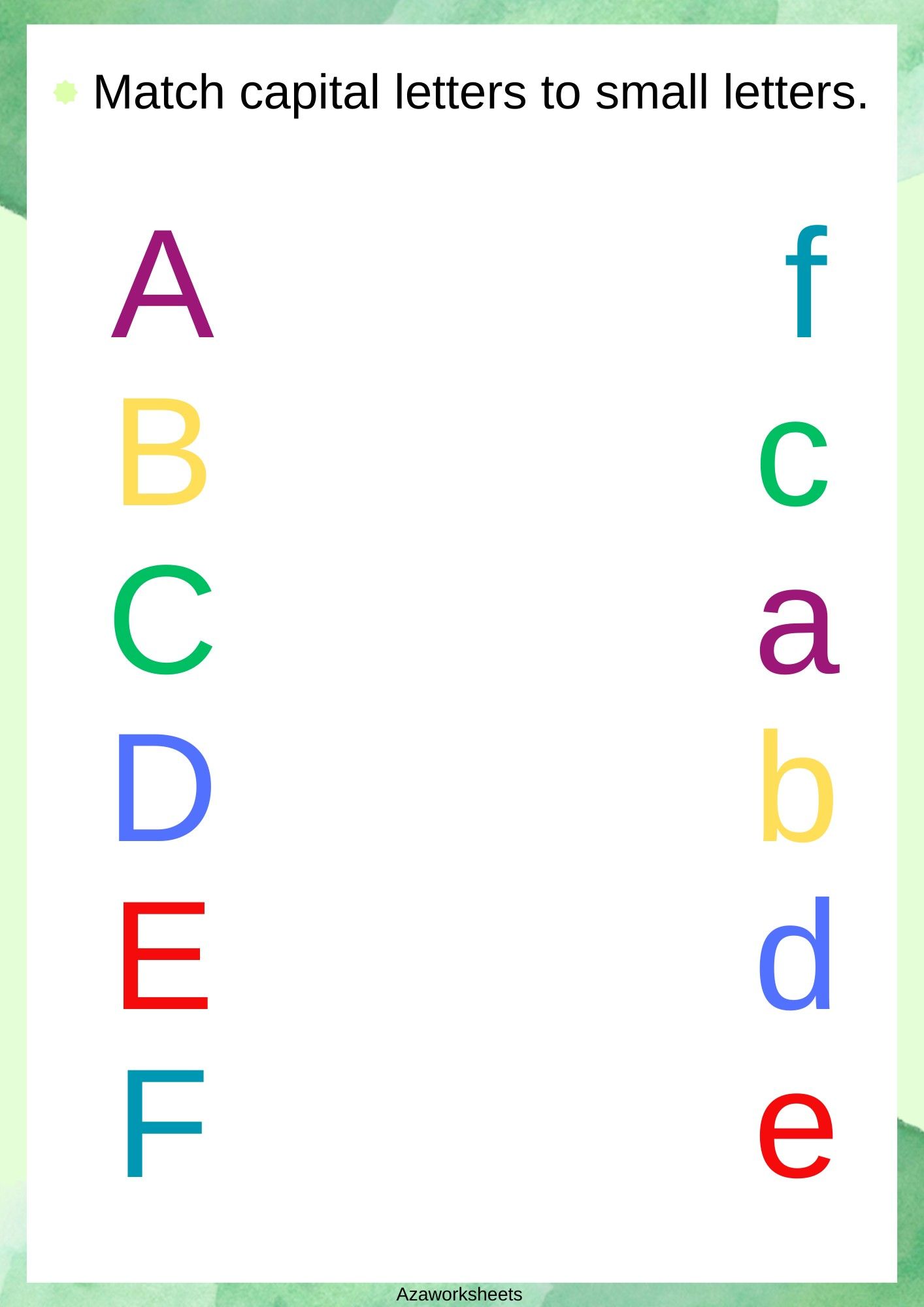
Teaching children to recognize and match capital letters to lowercase letters is an essential skill in early literacy development. Using a Match Capital Letters To Lowercase Worksheet can make this learning process both fun and effective. These worksheets provide a structured way for students to practice letter recognition, enhancing their reading and writing abilities. In this guide, I’ll share practical tips for using these worksheets effectively, including preparation, printing options, and classroom activities.
Understanding the Importance of Letter Recognition
Before diving into the specifics of the worksheet, it’s crucial to understand why matching capital letters to lowercase letters is essential. Children typically begin learning the alphabet around preschool age (3-5 years). Mastering both forms of letters helps them develop crucial skills for reading and writing. When children can recognize and match these letters, they build a strong foundation for future literacy skills.
Features of the Match Capital Letters To Lowercase Worksheet
The Match Capital Letters To Lowercase Worksheet typically includes a variety of engaging activities that make learning enjoyable. Here are some common features you might find:
- Visual Appeal: Worksheets often contain colorful images or themes that capture children’s attention.
- Variety of Exercises: Activities may include matching, tracing, or circling letters, making it easier for children to learn through different methods.
- Clear Instructions: Well-designed worksheets provide straightforward instructions that children can understand and follow independently.
When selecting or creating a worksheet, look for these features to ensure it’s engaging and educational.
Preparing Your Worksheet for Classroom or Home Use
Once you’ve chosen a Match Capital Letters To Lowercase Worksheet, it’s time to prepare for use. Here are some practical steps to ensure a smooth experience:
Downloading and Printing
- File Format: Most worksheets are available in PDF format, which is ideal for printing. PDFs maintain formatting across different devices, ensuring that your worksheet looks the same no matter how you access it.
- Printer Settings: When printing, set your printer to “portrait” orientation for best results. Most worksheets are designed with this in mind, making it easier for children to work on them.
- Paper Choice: Use standard A4 or letter-sized paper for printing. If you plan to laminate the worksheets for repeated use, consider using cardstock, which is sturdier and holds up better over time.
Lamination for Durability
If you want to use the worksheet multiple times, laminating it is a great option. This makes it easy for children to use dry-erase markers or crayons, allowing you to wipe it clean for reuse. Lamination also protects the worksheet from wear and tear, especially in a busy classroom setting.
Engaging Activities to Enhance Learning
To maximize the effectiveness of the Match Capital Letters To Lowercase Worksheet, consider incorporating interactive activities. Here are some ideas:
Matching Games
Transform the worksheet into a fun matching game. You can have children work individually or in pairs to match the capital letters to their corresponding lowercase letters. You can also create a competitive element by timing how long it takes them to complete the task.
Arts and Crafts
Combine literacy with creativity. After matching letters, encourage children to create their own alphabet book. They can draw pictures of items that begin with each letter and label them using both capital and lowercase letters. This reinforces their understanding while allowing for artistic expression.
Group Activities
For a classroom setting, consider organizing a group activity where children can work together to complete the worksheet. This promotes collaboration and allows children to learn from one another. You can set up different stations with various worksheets to cater to different learning styles.
Tips for Successful Worksheet Use
To ensure that children benefit from the Match Capital Letters To Lowercase Worksheet, keep these tips in mind:
- Supervision and Support: While the worksheet is designed for independent practice, be available to provide support or clarification if children have questions. This encourages them to think critically and understand the task better.
- Feedback: After children complete the worksheet, provide constructive feedback. Celebrate their successes and gently correct any mistakes to reinforce learning.
- Adjust Difficulty: If you notice that some children are struggling, consider offering additional practice worksheets or modifying the existing one to suit their needs. Conversely, provide more challenging activities for advanced learners to keep them engaged.
Where to Find Quality Worksheets
There are numerous sources online where you can find printable Match Capital Letters To Lowercase Worksheets. Look for reputable educational websites that offer a variety of resources. Often, these sites provide free downloads, making it easy to access high-quality worksheets without spending a dime.
Recommended Sites
- Teachers Pay Teachers: This platform features resources created by educators, often available for purchase or free download.
- Education.com: This site offers a range of worksheets and educational materials, many of which are free to access after signing up for an account.
- Scholastic: Known for its educational resources, Scholastic often provides printable worksheets for various subjects, including literacy.
Adapting Worksheets for Different Learning Styles
Every child learns differently, and it’s helpful to adapt the Match Capital Letters To Lowercase Worksheet to suit individual needs. Here are some ideas for customization:
- Visual Learners: Incorporate images that relate to the letters (e.g., A for apple, B for ball) to help visual learners make connections.
- Kinesthetic Learners: Use physical letters or blocks that children can manipulate while completing the worksheet. This hands-on approach can help reinforce their understanding of letter forms.
- Auditory Learners: Encourage children to say the letters out loud as they match them. This reinforces their learning through auditory repetition.
Closing Thoughts on Implementing the Worksheet
Using a Match Capital Letters To Lowercase Worksheet is a fantastic way to enhance letter recognition skills among young learners. By preparing the worksheets thoughtfully, incorporating engaging activities, and adapting them to suit various learning styles, you can create a rich learning environment. So, download your worksheet today, print it out, and get ready to help your students or children develop essential literacy skills in a fun and interactive way.









