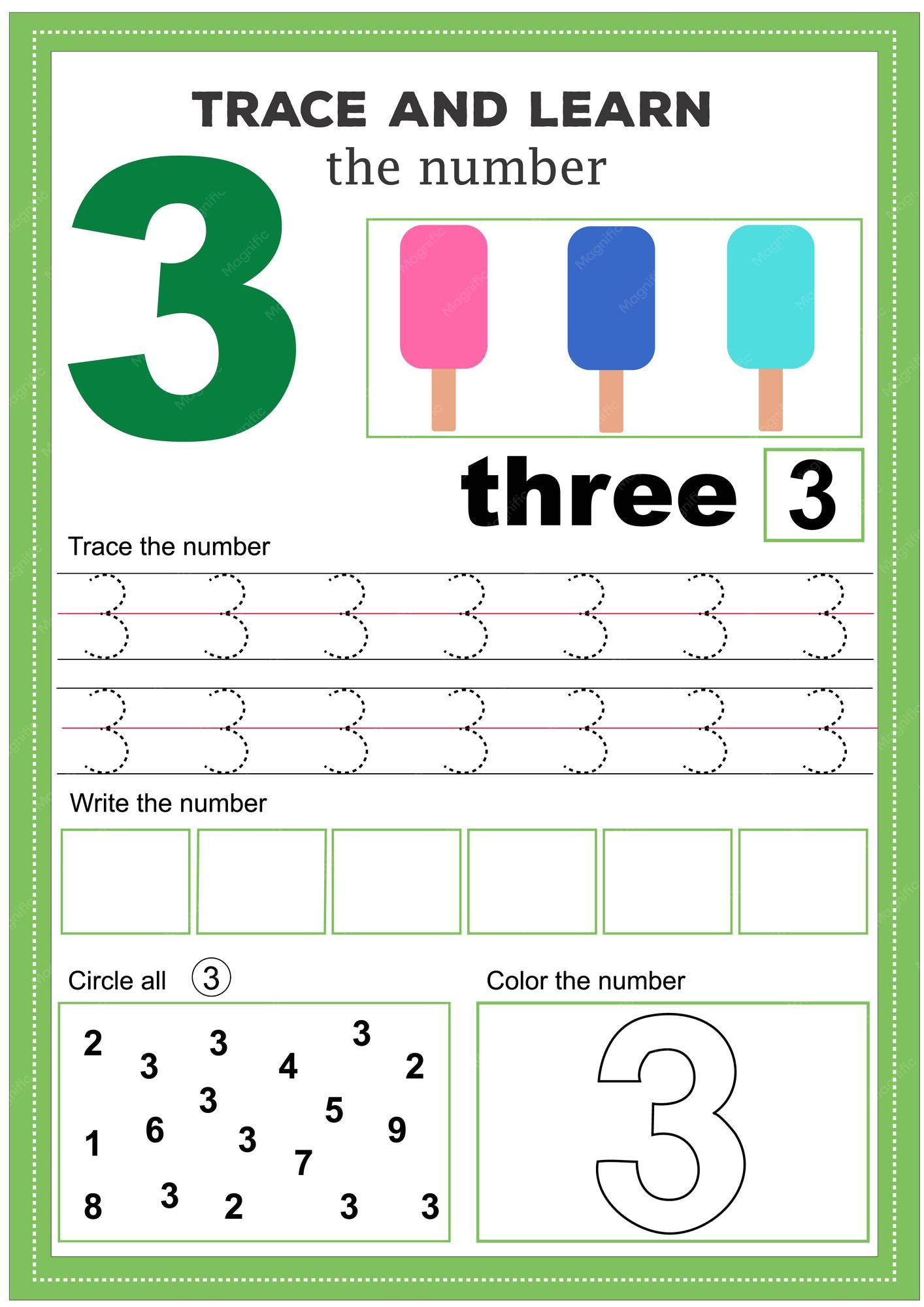
Teaching young children how to recognize and write numbers can be a challenging task. Many kindergarten teachers and parents often find themselves searching for effective resources to aid in this learning process. The Number 3 Worksheet For Kindergarten can be a practical solution to help children grasp the concept of the number three through engaging activities designed for their developmental level.
Understanding the Importance of Number Recognition
Number recognition is a foundational skill in early childhood education. When children can identify numbers, they build the groundwork for more complex mathematical concepts. The Number 3 Worksheet For Kindergarten focuses on helping students recognize the number three, which is often one of the first numbers they learn. This worksheet typically includes a variety of exercises that encourage children to practice tracing, counting, and identifying the number.
By using this worksheet, you can track each child’s progress while ensuring they develop confidence in their counting abilities. The hands-on approach allows them to engage with the material actively, making the learning experience more enjoyable.
Key Features of the Number 3 Worksheet
The Number 3 Worksheet For Kindergarten usually incorporates several elements aimed at enhancing learning outcomes:
- Tracing Exercises: Children can trace the number three, which helps improve their fine motor skills and muscle memory. This practice is essential for developing writing skills.
- Counting Activities: Worksheets might include images of objects that children can count, reinforcing the concept of quantity associated with the number three.
- Coloring Sections: By coloring in the number three or related images, children can express their creativity while learning.
- Visual Recognition: The worksheet often includes visual aids, such as pictures of three apples or three stars, to help children associate the number with a specific quantity.
These elements not only make learning more interactive, but they also cater to different learning styles, ensuring that all students can benefit from the resource.
Using the Worksheet in a Weekly Plan
To maximize the effectiveness of the Number 3 Worksheet For Kindergarten, consider incorporating it into a structured weekly plan. Spacing repeated practice over several days can significantly enhance retention. Here’s how you might structure it:
Day 1: Introduction to Number Three
Start by introducing the number three through verbal discussions. Use physical objects, like blocks or counters, to show three items. After this, hand out the worksheet for children to trace the number three.
Day 2: Counting Practice
On the second day, focus on counting. Use the worksheet to have children count groups of objects that total three. This reinforces their understanding of the relationship between the number and quantity.
Day 3: Creative Expression
Dedicate this day to the coloring sections of the worksheet. Encourage students to color the number three and any related images. This activity allows for creative expression and keeps the learning process enjoyable and lighthearted.
Day 4: Review and Reinforce
On the fourth day, review what the children have learned so far. You can do this through games or group activities that involve counting to three. For example, you could play a counting game where children group into threes.
Day 5: Assessment
End the week with a simple assessment. This could be done informally by asking children to show you three fingers or count three objects. This gives you a sense of their grasp of the concept and allows for necessary adjustments in teaching.
Tips for Effective Implementation
When using the Number 3 Worksheet For Kindergarten, consider the following tips to enhance its effectiveness:
- Use Clear Instructions: Ensure that the children understand what they are expected to do with the worksheet. Clear, simple instructions help minimize confusion.
- Encourage Peer Learning: Pair children up to work on the worksheet together. This encourages collaboration and allows them to learn from each other.
- Incorporate Movement: To keep energy levels high, include physical activities related to counting. For example, children can hop three times or clap three times.
- Provide Frequent Feedback: As children work through the worksheet, offer positive reinforcement. This helps build their confidence and encourages them to keep trying.









