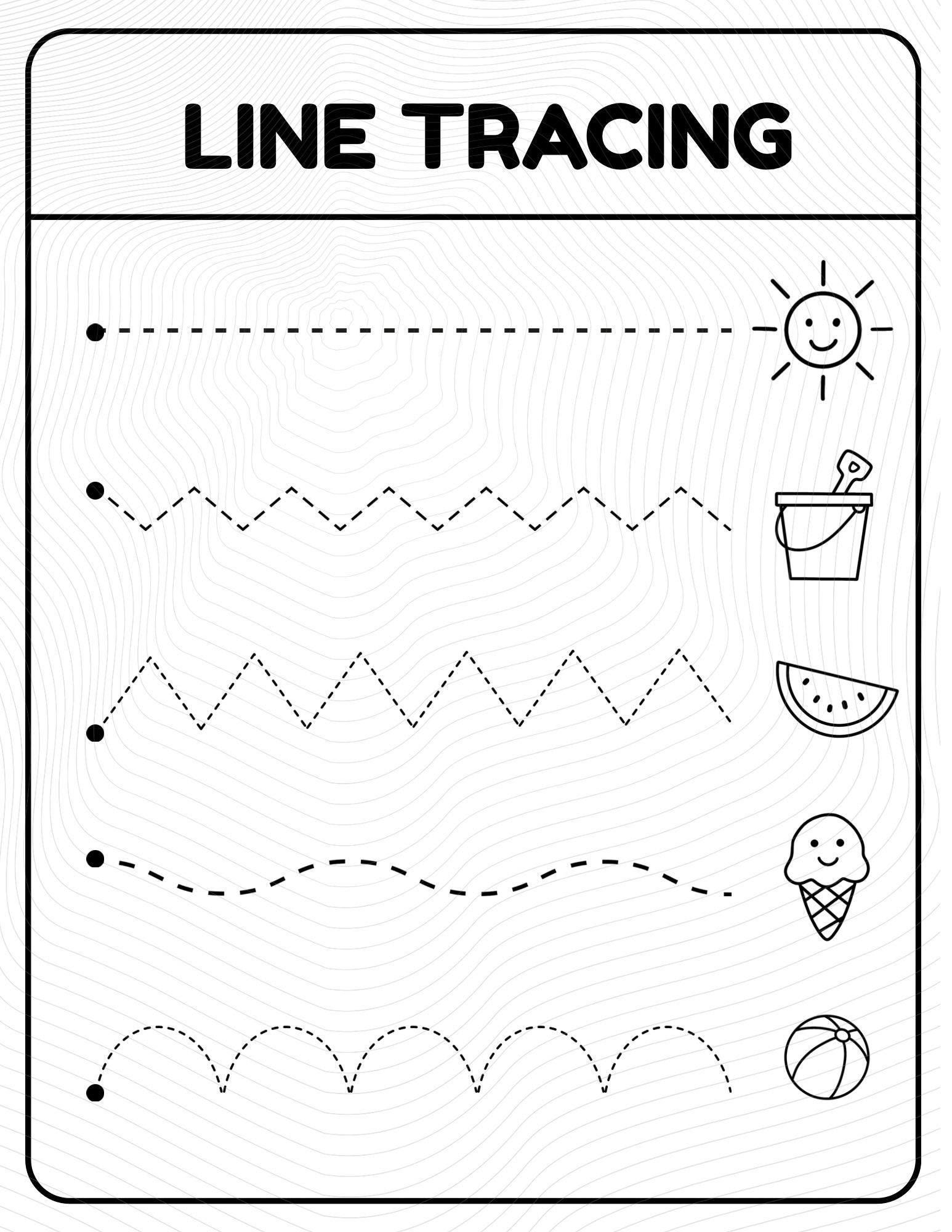
Tracing lines is an essential skill for preschoolers, helping to develop fine motor skills and hand-eye coordination. Tracing Lines For Preschoolers Worksheets are designed to make this practice fun and engaging for young learners. These worksheets are typically formatted as PDFs, making them easy to download, print, and use at home or in the classroom.
Understanding the Importance of Tracing Lines
Tracing is foundational for preschoolers as it prepares them for future writing. At this age, children are developing their grip and control over writing instruments. By engaging with tracing worksheets, they practice the motions necessary for forming letters, numbers, and shapes. This is crucial as it builds confidence and sets the stage for more complex writing tasks later on.
Types of Tracing Lines Worksheets
When looking at Tracing Lines For Preschoolers Worksheets, you’ll find various types designed to cater to different skill levels and learning objectives:
- Straight Lines: These worksheets feature simple, straight lines for children to trace. They help build basic control and confidence.
- Curved Lines: Introducing curves adds complexity and challenges children to develop their coordination further.
- Shapes: Worksheets that incorporate basic shapes (like circles, squares, and triangles) help children learn to trace and recognize different forms.
- Letters and Numbers: More advanced worksheets may include letters and numbers, bridging the gap between tracing and actual writing.
How to Use Tracing Lines Worksheets Effectively
To maximize the benefits of Tracing Lines For Preschoolers Worksheets, it’s essential to incorporate them thoughtfully into your teaching methods. Here are some practical tips:
- Choose the Right Difficulty Level: Assess your child’s skill level before selecting a worksheet. Starting with simple lines and progressing to more complex shapes and letters is vital for maintaining engagement and preventing frustration.
- Material Setup: Print the worksheets on standard letter-sized paper (8.5 x 11 inches) for easy handling. Use a good quality printer to ensure that the lines are clear and easy to see. If the worksheet is to be used repeatedly, consider printing on cardstock or laminating it for durability.
- Use Appropriate Tools: Provide children with different writing tools to trace with, such as crayons, colored pencils, or markers. Each tool offers a unique experience and can help improve grip strength and control.
- Incorporate Movement: Pair tracing activities with physical movement for a more holistic learning experience. For instance, ask children to trace large lines with their fingers in the air before moving to the worksheet.
- Follow-Up Activities: After tracing, transition to free drawing or writing to reinforce the skills practiced. This helps children understand the connection between tracing and actual writing.
Downloading and Printing Worksheets
Finding and downloading Tracing Lines For Preschoolers Worksheets is straightforward. Many educational websites offer free or paid options. Here’s how to ensure a smooth process:
- File Format: Look for worksheets in PDF format. This format preserves the layout and prevents any reformatting issues that can occur with other file types.
- Printer Settings: Use a standard printer setting for best results. Ensure your printer is set to “portrait” orientation, as this is most common for worksheets.
- Paper Choices: For regular use, standard printer paper works well. However, if you plan to laminate the worksheets for repeated use, opt for heavier cardstock.
Engaging Activities Beyond Tracing
To further enhance learning, consider integrating these worksheets into broader activities. Here are a few ideas:
- Art Projects: After tracing, have children color in the shapes or letters, adding an artistic element to the exercise.
- Interactive Games: Use tracing lines as a part of a scavenger hunt where kids find objects in the classroom that resemble the shapes or lines they’ve traced.
- Story Time: Create a story around the shapes or letters, encouraging children to draw connections between their tracing work and narrative development.
Things to Watch Out For
While Tracing Lines For Preschoolers Worksheets are incredibly beneficial, there are a few things to keep in mind:
- Avoid Overwhelm: Too many worksheets or overly complex designs can lead to frustration. Always assess the child’s mood and readiness.
- Monitor Grip and Posture: Watch for proper grip on writing tools and ensure children sit comfortably to avoid fatigue or strain. Good posture will support better handwriting in the future.
- Encourage Independence: Allow children to work at their own pace. Celebrate their progress without rushing them to complete the worksheets.
By focusing on engaging, age-appropriate activities, your preschoolers will develop essential skills while enjoying the learning process. Tracing Lines For Preschoolers Worksheets are a fantastic resource to add to your teaching toolkit, offering both structure and creative opportunities for young learners.









