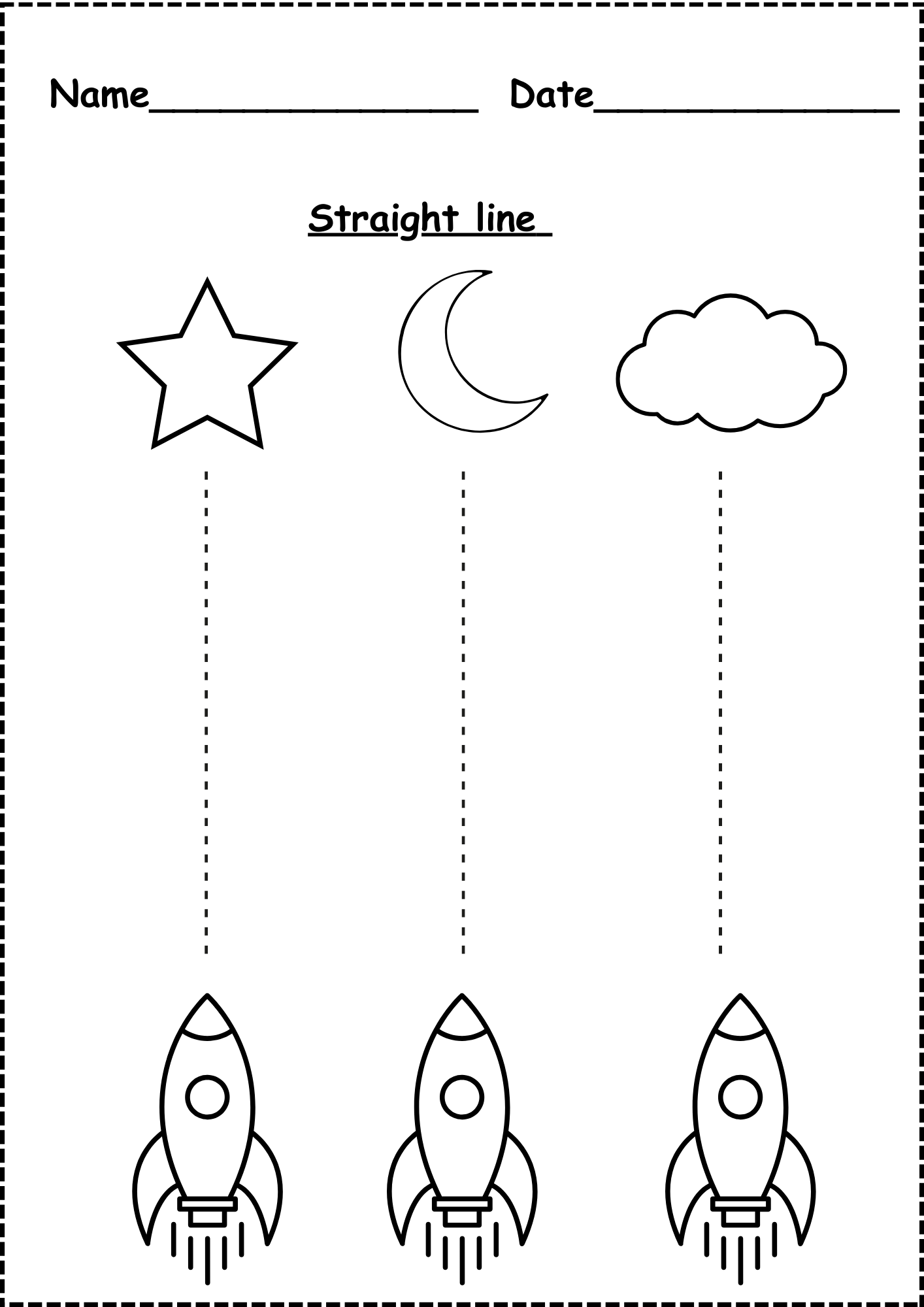
Printable Tracing Straight Lines Worksheets are an excellent resource for teachers and parents aiming to improve children’s fine motor skills and hand-eye coordination. These worksheets stand out by providing structured practice that is both engaging and educational. Designed with young learners in mind, they offer a clear path to mastering the skill of tracing, which is foundational for writing and other learning activities.
Understanding the Purpose of Tracing Worksheets
Tracing worksheets serve as a bridge between basic motor skills and more complex writing tasks. When children trace straight lines, they develop the control necessary to hold a pencil correctly, which is crucial for future writing. This skill is particularly important for preschool and kindergarten students, typically ages 4 to 6, who are just beginning their educational journey.
The act of tracing helps children learn how to form letters and numbers accurately. It also builds confidence as they see their progress. As they successfully trace each line, they’re not just practicing a physical skill; they’re also gaining cognitive confidence that contributes to their overall learning experience.
Key Features of Printable Tracing Straight Lines Worksheets
When selecting Printable Tracing Straight Lines Worksheets, it’s essential to understand their design and layout. Here are some features that enhance their effectiveness:
- Variety of Lines: Worksheets typically include different types of straight lines, such as horizontal, vertical, and diagonal. This variety helps children practice controlling their pencil movements in multiple directions.
- Guided Tracing: Most worksheets provide dotted lines or arrows that guide children on how to trace correctly. This feature is particularly useful for younger learners who may struggle with freehand drawing.
- Age-Appropriate Design: The design of these worksheets is usually colorful and engaging, which captures children’s attention and motivates them to practice.
- Clear Instructions: Good worksheets include simple instructions to help both teachers and parents guide children through the tracing process.
How to Use Tracing Worksheets Effectively
To maximize the benefits of Printable Tracing Straight Lines Worksheets, follow these practical steps:
- Print on Quality Paper: It’s advisable to print these worksheets on cardstock or thicker paper. This prevents tearing and allows for repeated use, especially if you plan to laminate them for durability.
- Use the Right Writing Tools: Provide children with various writing instruments, such as crayons, colored pencils, or markers. Each tool offers a different tactile experience that can aid in developing fine motor skills.
- Create a Structured Environment: Set up a distraction-free workspace. This helps children focus on the task at hand and reinforces the importance of their tracing practice.
- Provide Immediate Feedback: As children work through the worksheets, offer positive reinforcement. A simple “Great job!” can motivate them to keep trying, even if they make mistakes.
- Incorporate into Daily Routine: Integrate tracing practice into daily learning activities. For example, you can use these worksheets as part of a morning routine or during dedicated learning times.
Monitoring Progress With Tracing Worksheets
As children engage with Printable Tracing Straight Lines Worksheets, it’s important to monitor their progress. Here’s how you can assess their mastery of the skill:
- Check for Consistency: Look for consistent tracing along the lines. If a child repeatedly veers off course, it may indicate they need more practice with hand control.
- Evaluate Pencil Grip: Observe how the child holds their writing tool. A proper grip is essential for future writing tasks, so ensure they’re holding it correctly.
- Track Improvement Over Time: Keep a record of completed worksheets to track progress. You might notice that as they practice, their lines become straighter and more controlled.
- Incorporate Variety: If a child masters straight lines, introduce more complex shapes and patterns. This gradual increase in difficulty keeps them challenged and engaged.
Additional Activities to Reinforce Skills
In addition to using Printable Tracing Straight Lines Worksheets, consider these complementary activities to reinforce fine motor skills:
- Drawing Shapes: Encourage children to draw shapes freely after tracing them. This helps solidify their understanding of how to form lines into shapes.
- Using Playdough: Manipulating playdough to form straight lines can be a fun way to reinforce the concept of line formation without the pressure of writing.
- Scavenger Hunts: Create scavenger hunts that involve finding objects that resemble straight lines in their environment. This adds a real-world application to the skill.
- Interactive Games: Use digital applications or online games that focus on tracing and drawing. Many children enjoy interactive learning, which can complement traditional worksheets.









