When it comes to teaching young children how to read, utilizing worksheets for word families for kindergarten can be incredibly effective. These worksheets help kids recognize patterns in words, making it easier for them to decode unfamiliar terms. In this article, I’ll share practical ways to incorporate these worksheets into your classroom or homeschool setting, ensuring that your students gain the foundational skills they need for reading success.
Understanding Word Families and Their Importance
Word families are groups of words that share a common feature or pattern, typically a phonetic ending. For example, the “at” family includes words like cat, hat, and bat. Teaching kids about word families not only helps them with reading but also boosts their spelling and vocabulary.
By focusing on these patterns, children can make connections between words, enhancing their understanding of language. Worksheets for word families for kindergarten can provide structured practice in a fun and engaging way, making learning enjoyable.
How to Use Worksheets for Word Families
Using worksheets effectively requires some thought about how to integrate them into your existing curriculum. Here are a few practical strategies:
Incorporate Worksheets Into Daily Routines
Set aside a specific time each day for word family activities. This could be a dedicated reading block or a fun morning routine. For instance, you can start each day with a short lesson on a new word family followed by a related worksheet. This routine helps reinforce learning and establishes a rhythm that students can anticipate.
Group Activities
Encourage collaboration by having students work in pairs or small groups on their worksheets. This fosters discussion and allows children to learn from one another. You might provide a worksheet that includes word family sorting activities, where students can discuss why certain words belong to the same family.
Interactive Learning
Make the worksheets interactive by incorporating hands-on activities. For example, after completing a worksheet, students could create a word family poster using colorful markers and images cut from magazines. This not only reinforces their learning but also allows for creativity.
Types of Worksheets for Word Families
There are various types of worksheets available for teaching word families. Here are some popular options you can look for:
Sorting Worksheets
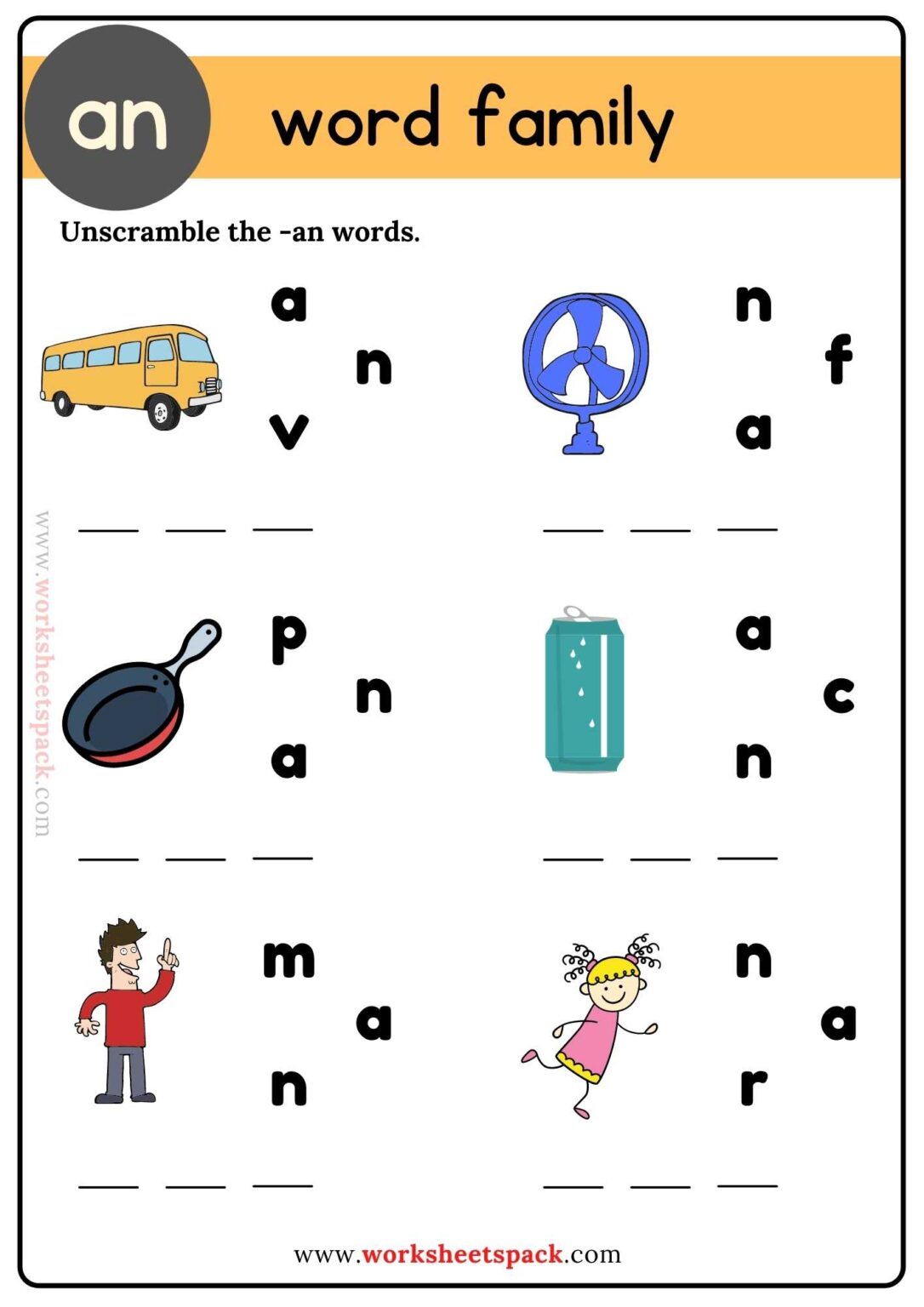
These worksheets typically ask students to sort words into their correct word families. For example, students might have a list of words and need to categorize them into “an,” “ig,” and “at” families. This activity reinforces their understanding of the patterns in words.
Fill-in-the-Blank Worksheets
These worksheets are excellent for practicing spelling and word recognition. Children can fill in missing letters to complete words within a family. For instance, they might see “c_t” and write “a” to form “cat.” This kind of activity is great for reinforcing phonics skills.
Coloring Worksheets
Coloring worksheets can make learning fun! These might combine word family practice with coloring pictures that correspond to the words. For example, a worksheet might have students color a hat while practicing words in the “at” family. This combination of art and literacy keeps kids engaged.
Tips for Printing and Preparing Worksheets
To maximize the effectiveness of your worksheets, consider the following tips for printing and preparation:
Paper Type
Using cardstock instead of standard printer paper can make your worksheets more durable, especially if they will be used multiple times. Cardstock holds up better against wear and tear, especially in a busy classroom setting.
Print Settings
When printing, select the portrait layout for most worksheets, as this typically fits better on standard-sized paper. If you’re using a color printer, be sure to check your ink levels beforehand to avoid running out mid-print.
Lamination for Reuse
If you plan on using worksheets for different groups of students or over multiple years, consider laminating them. This allows for dry-erase markers to be used, making the sheets reusable and saving on paper costs in the long run.
Evaluating Progress With Word Family Worksheets
To ensure that your students are grasping the concepts, it’s essential to evaluate their progress. Here are some ways to do that:
Observational Assessments
While students work on their worksheets, take the time to observe their strategies. Are they able to identify and sort words correctly? This informal assessment can give you insight into their understanding.
Check for Comprehension
After completing a worksheet, ask students to explain their thought process. Why did they group certain words together? This will help you gauge their comprehension and ability to articulate their understanding of word families.
Use Worksheets as Homework
Assigning worksheets as homework can reinforce what students learned in class. This practice allows you to see how well they can work independently and apply their knowledge outside of the classroom setting.
Finding Quality Worksheets for Word Families
When looking for worksheets for word families for kindergarten, you want to ensure that they are age-appropriate and engaging. Here are some places to find high-quality resources:
Online Educational Websites
Many educational websites offer free and downloadable worksheets. Look for those specifically designed for kindergarten students and that focus on phonics and word families. Websites like Teachers Pay Teachers or Education.com can be great starting points.
Printable Resource Packs
Consider investing in printable resource packs that cater to early literacy. These packs often include a variety of worksheets focused on word families, making it easy to have a comprehensive set of resources at your disposal.
Create Your Own
If you can’t find exactly what you need, don’t hesitate to create your own worksheets. You can tailor them to suit the specific needs of your students, focusing on the word families that they find most challenging.
Engaging Activities Beyond Worksheets
While worksheets are a fantastic tool, integrating other activities can enhance learning. Here are a few ideas:
Word Family Games
Consider playing games that reinforce word families. For example, a word family bingo game can be both educational and enjoyable. Create bingo cards with words from different families, and as you call out the words, students can mark them off.
Storytime Connections
Incorporate word families into your storytime. Choose books that feature a lot of words from specific families and discuss them during reading. This helps students see word families in context, deepening their understanding.
Rhyming Activities
Since many word families share similar sounds, incorporating rhyming activities can be beneficial. Have students create rhyming poems or songs using words from the same family, fostering creativity and reinforcing their learning.
By utilizing worksheets for word families for kindergarten along with interactive activities and thoughtful assessments, you’ll provide a well-rounded literacy experience for your students. The key is to keep the learning engaging and connected to real-world language use. This approach not only enhances their reading skills but also instills a love for learning that will benefit them for years to come. Choose a few of the strategies mentioned, and watch your students thrive in their literacy journey.